

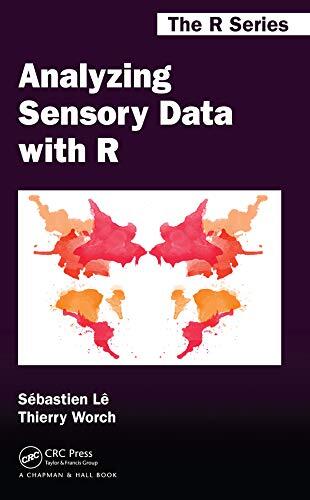
Dettagli del libro
Formato
Kindle
Pagine
374
Lingua
Inglese
Pubblicato
Jan 1, 2018
Editore
Chapman and Hall/CRC
Edizione
1
ISBN-10
1315362740
ISBN-13
9781315362748
Descrizione
This book serves as an essential guide for researchers and practitioners seeking to optimize their analysis of sensory data using R. With a strong focus on statistical methodologies, it provides readers with the tools needed to effectively navigate the complexities of sensory data, ensuring that they can make informed decisions when faced with various analytical challenges.
Sebastien Le and Thierry Worch delve into the intricacies of data types, measurement scales, and the impact that these factors can have on the results. Their expertise allows them to present statistical methods in an accessible manner, making it easier for users to identify the best approaches for their specific sensory analysis needs. The combination of theory and practical examples embodies a comprehensive learning experience.
Each chapter builds on the last, gradually expanding on techniques and applications, which empowers readers to become adept at employing R for their own sensory data projects. By emphasizing real-world applications, the authors equip users with the necessary skills to extract meaningful insights from their data.
In addition, the book addresses common pitfalls and challenges encountered during analysis, offering solutions and guidance on how to overcome these obstacles. It ultimately serves as a valuable resource for both seasoned statisticians and those new to the field, fostering a deeper understanding of how to leverage R for effective sensory data analysis.
Sebastien Le and Thierry Worch delve into the intricacies of data types, measurement scales, and the impact that these factors can have on the results. Their expertise allows them to present statistical methods in an accessible manner, making it easier for users to identify the best approaches for their specific sensory analysis needs. The combination of theory and practical examples embodies a comprehensive learning experience.
Each chapter builds on the last, gradually expanding on techniques and applications, which empowers readers to become adept at employing R for their own sensory data projects. By emphasizing real-world applications, the authors equip users with the necessary skills to extract meaningful insights from their data.
In addition, the book addresses common pitfalls and challenges encountered during analysis, offering solutions and guidance on how to overcome these obstacles. It ultimately serves as a valuable resource for both seasoned statisticians and those new to the field, fostering a deeper understanding of how to leverage R for effective sensory data analysis.
Generi
Natura