

Descrizione
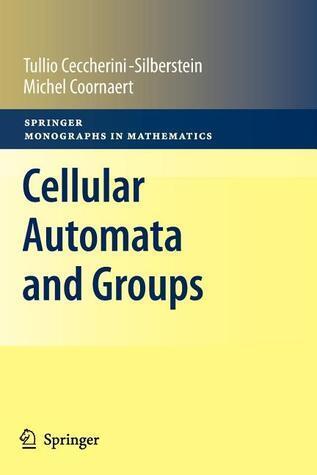
Exploring the intricate relationship between cellular automata and group theory, this book delves into how these mathematical constructs can be applied to various systems and phenomena. The authors, Tullio Ceccherini-Silberstein and Michel Coornaert, guide readers through theoretical frameworks, emphasizing the connection between abstract concepts and their practical implications.
Through a series of comprehensive discussions and analyses, the book highlights the significance of cellular automata as a model for complex systems. By integrating group theory, it unveils new perspectives on dynamics and behaviors in mathematical constructs, fostering a deeper understanding of their interplay.
Aimed at mathematicians and researchers alike, this work serves as a valuable resource, pushing the boundaries of knowledge in both fields. With careful attention to detail, it opens avenues for further exploration and application of these powerful tools in understanding the complexities of computation and structure.
Through a series of comprehensive discussions and analyses, the book highlights the significance of cellular automata as a model for complex systems. By integrating group theory, it unveils new perspectives on dynamics and behaviors in mathematical constructs, fostering a deeper understanding of their interplay.
Aimed at mathematicians and researchers alike, this work serves as a valuable resource, pushing the boundaries of knowledge in both fields. With careful attention to detail, it opens avenues for further exploration and application of these powerful tools in understanding the complexities of computation and structure.
Dettagli del libro
Formato
Brossura
Pagine
460 pagine
Lingua
Inglese
Pubblicato
nov 5, 2012
Editore
Springer
Edizioni
2 edizioni
ISBN-10
3642264751
ISBN-13
9783642264757