

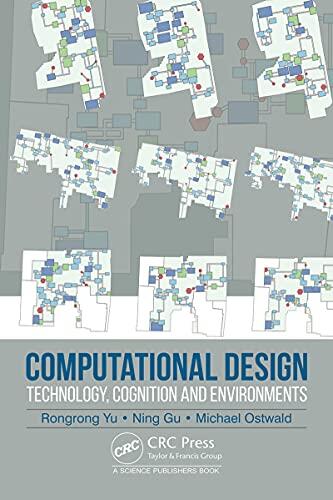
Descrizione
Rongrong Yu, Ning Gu, and Michael J. Ostwald delve into the transformative potential of computational design in their insightful exploration of modern architectural practices. As technology advances, the authors illuminate how these new tools not only enhance creativity but also reshape the cognitive processes involved in design, prompting professionals to rethink their approaches to spatial environments.
Through a blend of theory and practical application, the book examines how computational methodologies can foster innovative solutions to complex architectural challenges. Each chapter encourages readers to embrace these tools as integral elements of the design process, fostering a synergy between technology and human creativity.
The authors also highlight critical case studies that demonstrate the impact of computational design on contemporary architecture and urban environments. This critical analysis serves as a valuable resource for architects, designers, and researchers seeking to understand the intersection of technology, cognition, and environmental considerations in their work.
Through a blend of theory and practical application, the book examines how computational methodologies can foster innovative solutions to complex architectural challenges. Each chapter encourages readers to embrace these tools as integral elements of the design process, fostering a synergy between technology and human creativity.
The authors also highlight critical case studies that demonstrate the impact of computational design on contemporary architecture and urban environments. This critical analysis serves as a valuable resource for architects, designers, and researchers seeking to understand the intersection of technology, cognition, and environmental considerations in their work.
Dettagli del libro
Formato
Kindle
Pagine
242 pagine
Lingua
Inglese
Pubblicato
Jul 25, 2021
Editore
CRC Press
Edizioni
2 editions
ISBN-10
0429522908
ISBN-13
9780429522901
Generi
Scienza e Tecnologia
Storia
Contemporaneo