Dettagli del libro
Formato
Brossura
Pagine
396
Lingua
Inglese
Pubblicato
Jan 1, 2005
Editore
Springer
Edizione
2005
ISBN-10
3540244514
ISBN-13
9783540244516
Descrizione
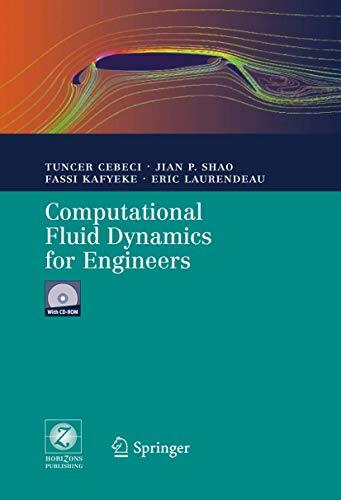
This comprehensive guide delves into the intricacies of computational fluid dynamics (CFD), making it an essential resource for engineers seeking to enhance their understanding of fluid flow and its mathematical foundations. It spans a wide range of topics, starting from fundamental panel methods and advancing to complex Navier-Stokes equations, which govern fluid motion. Throughout, the authors emphasize practical applications and the development of computer programs that facilitate real-world problem-solving.
The text methodically unpacks the theoretical underpinnings of fluid dynamics, illustrating how different computational methods can be employed to model various scenarios. Each chapter is designed to build on the last, providing a strong framework for both novice and experienced engineers. Readers benefit from the authors' expertise, as they present intricate concepts in an approachable manner, making the transition from theory to application seamless.
Moreover, this book stands out not only for its clarity and depth but also for its hands-on approach. By integrating coding examples and practical exercises, it encourages engineers to engage with computational tools directly, fostering an environment of learning that is both interactive and dynamic. For anyone eager to explore the world of CFD, this resource serves as a vital companion on their professional journey.
The text methodically unpacks the theoretical underpinnings of fluid dynamics, illustrating how different computational methods can be employed to model various scenarios. Each chapter is designed to build on the last, providing a strong framework for both novice and experienced engineers. Readers benefit from the authors' expertise, as they present intricate concepts in an approachable manner, making the transition from theory to application seamless.
Moreover, this book stands out not only for its clarity and depth but also for its hands-on approach. By integrating coding examples and practical exercises, it encourages engineers to engage with computational tools directly, fostering an environment of learning that is both interactive and dynamic. For anyone eager to explore the world of CFD, this resource serves as a vital companion on their professional journey.
Generi
Scienza e Tecnologia