

Descrizione
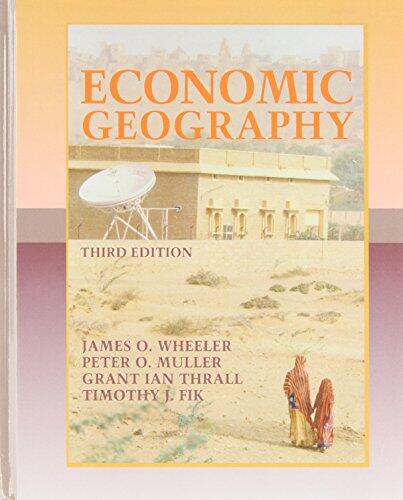
Examining the intricate relationship between economy and space, this informative work delves into the key theories of economic geography. It offers a comprehensive foundation for understanding how economic activities are influenced by geographical factors, such as location, resources, and cultural dynamics. Readers will gain insights into how various regions develop economically and how global interconnectedness shapes local economies.
Additionally, the authors present a critical analysis of contemporary trends in economic geography, emphasizing the importance of spatial considerations in economic decision-making. Through detailed case studies and real-world examples, the book illustrates the practical applications of economic geography, making it a valuable resource for students, researchers, and professionals alike. The collaborative efforts of Muller, Wheeler, Fik, and Thrall bring a wealth of knowledge, providing clarity on complex concepts and fostering a deeper appreciation for the role geography plays in economic systems.
Additionally, the authors present a critical analysis of contemporary trends in economic geography, emphasizing the importance of spatial considerations in economic decision-making. Through detailed case studies and real-world examples, the book illustrates the practical applications of economic geography, making it a valuable resource for students, researchers, and professionals alike. The collaborative efforts of Muller, Wheeler, Fik, and Thrall bring a wealth of knowledge, providing clarity on complex concepts and fostering a deeper appreciation for the role geography plays in economic systems.
Dettagli del libro
Formato
Copertina rigida
Pagine
424 pagine
Lingua
Inglese
Pubblicato
feb 4, 1998
Editore
Wiley
Edizione
3
Edizioni
3 edizioni
ISBN-10
0471536202
ISBN-13
9780471536208