

Descrizione
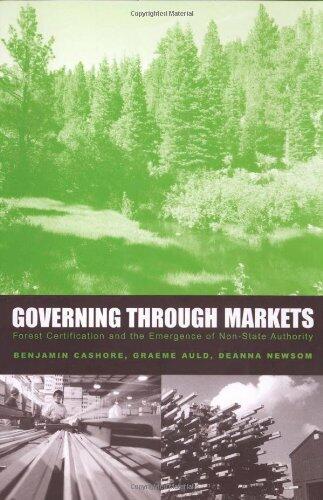
Benjamin Cashore delves into the complex relationship between environmental governance and market forces in his exploration of forest certification. This work examines how the rise of non-state authorities has reshaped the way forests are managed and sustained, moving beyond traditional governmental oversight.
Through detailed analysis, Cashore highlights the emergence of certifications as a powerful tool that influences forestry practices and policies on a global scale. The study reveals the intricate dynamics between these non-state mechanisms and existing regulatory frameworks, showcasing how they interact to create a new paradigm in environmental governance.
As Cashore articulately argues, the implications of these developments extend beyond forest management, raising critical questions about accountability and the future of sustainable practices in various industries. His insights challenge readers to reconsider the role of markets in addressing environmental issues and the potential for collaborative governance in achieving sustainability goals.
Through detailed analysis, Cashore highlights the emergence of certifications as a powerful tool that influences forestry practices and policies on a global scale. The study reveals the intricate dynamics between these non-state mechanisms and existing regulatory frameworks, showcasing how they interact to create a new paradigm in environmental governance.
As Cashore articulately argues, the implications of these developments extend beyond forest management, raising critical questions about accountability and the future of sustainable practices in various industries. His insights challenge readers to reconsider the role of markets in addressing environmental issues and the potential for collaborative governance in achieving sustainability goals.
Dettagli del libro
Formato
Copertina rigida
Lingua
Inglese
Editore
Yale University Press