

Dettagli del libro
Descrizione
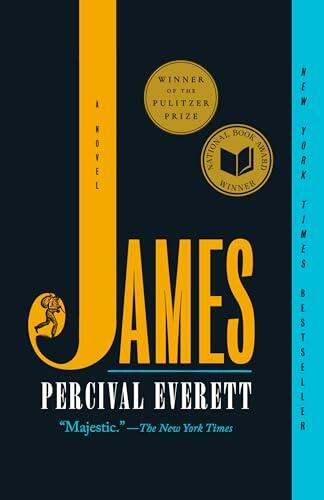
When the enslaved Jim overhears that he is about to be sold to a man in New Orleans, separated from his wife and daughter forever, he decides to hide on nearby Jackson Island until he can formulate a plan. Meanwhile, Huck Finn has faked his own death to escape his violent father, recently returned to town. As all readers of American literature know, thus begins the dangerous and transcendent journey by raft down the Mississippi River toward the elusive and too-often-unreliable promise of the Free States and beyond.
While many narrative set pieces of The Adventures of Huckleberry Finn remain in place (floods and storms, stumbling across both unexpected death and unexpected treasure in the myriad stopping points along the river’s banks, encountering the scam artists posing as the Duke and Dauphin…), Jim’s agency, intelligence and compassion are shown in a radically new light.
Generi
Recensioni
Visualizza tutto
James is a sharp re-imagining of The Adventures of Huckleberry Finn told, this time, from the perspective of James, 'Jim'. It is a fantastic read that isn't afraid to confront the realities of Racism and Slavery. However Everett tells this tale with a soft, inquisitive feel that never strays into overbearing or heavy-handed territory.
Whilst I would have liked to have explored some of the more emotional beats a little more thoroughly, I really enjoyed reading this and having never read the Classic from Twain, its something I want to go and read sooner rather than later.

I think Mark Twain would have liked this story. James is a continuation of Huckleberry Finn's story; however, Huck's friend Jim (the slave) is the main character.

4.5 starsPercival Everett is a very clever writer. Not just in his satire but also in is his ability to speak to multiple audiences simultaneously. I really appreciated both of those in James. It is a deceptively sophisticated novel. What looks like a straightforward retelling of a literary classic, written in accessible prose, following a familiar adventure plot, actually has layer upon layer of meaning. Enslaved Africans had rich and complex interior intellectual and spiritual lives despite the dehumanizing systems they lived and labored under. They responded to the violence they faced in a variety of ways that proved their ingenuity, resilience, and compassion toward one another.I don't really have anything negative to say about this book. And it's interesting that much of the criticism I've read on here seems to reflect either white readers' connection to classic American literature or their deep investment in conventional narratives told about enslaved Africans. Not surprised though.This is the 4th novel by Everett I have read this year. While not my favorite, I still found it deserving of all the praise and accolades.