

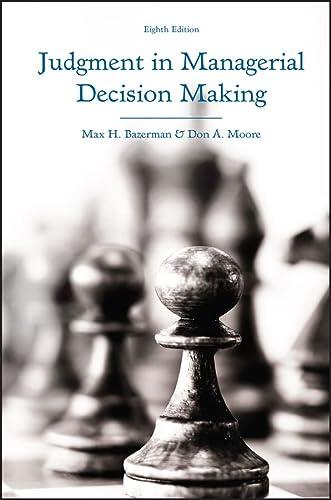
Descrizione
In a world filled with complex choices, the pervasive illusion of objectivity often clouds judgment. The authors delve into the mental traps that mislead managers and decision-makers, unveiling the psychological biases that subtly influence their reasoning. By exploring real-world scenarios, they illustrate how individuals are frequently swayed by emotions, social pressures, and cognitive errors, leading to less-than-optimal outcomes.
Throughout the narrative, the authors emphasize the importance of awareness in decision-making processes. They advocate for a more deliberate approach that incorporates structured thinking and critical analysis, urging leaders to question their assumptions and recognize the influence of external factors. This approach not only enhances decision quality but also fosters a culture of accountability within organizations.
Ultimately, the work serves as a guide for anyone looking to refine their decision-making skills. It encourages a shift from blind trust in one's instincts to a more systematic and reflective process, paving the way for better, more informed choices in the face of uncertainty.
Dettagli del libro
Formato
Copertina rigida
Pagine
288 pagine
Lingua
Inglese
Pubblicato
ott 16, 2012
Editore
Wiley
Edizione
8
Edizioni
6 edizioni
ISBN-10
1118065700
ISBN-13
9781118065709