

Descrizione
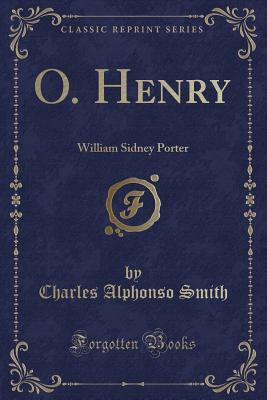
Excerpt from O. William Sidney Porter
If the work of William Sidney Porter, better known as O. Henry, was the most noteworthy contribution made to American literature during the first decade of the twentieth century, the expanding vogue of that work has no less characterized the succeeding decade. He was hardly a national author at the time of his death in 1910, but in 1920 he seems securely national and international. The largest class of midshipmen at the United States Naval Academy was recently asked to name in writing the author whose complete works, if placed in the library of every American battleship, would be most often called for. O. Henry led by two hundred votes, Mark Twain coming second. It will be recalled also that at the autograph sales held in New York at the American Art Galleries early in 1918 a twelve-page letter from O. Henry, already published, sold for $810, while an unpublished autobiographical manuscript by Mark Twain, consisting of fourteen pages, brought only $540. "If I had discovered him before his death," wrote Sir James M. Barrie, "I should have considered a trip to the United States well worth while to make his acquaintance." But nothing ever said of O. Henry would have pleased him more than a sentence from a London paper during the great "We ought to be reading our casualty lists, for God knows they are heavy enough; but, instead, we are all reading O. Henry." The appreciation of O. Henry came to England, however, only after effort. "It was not easy for the British public to 'get' O. Henry at first," said Sir Ernest Hodder Williams during his recent visit to New York. "They had to try. But they've got him now, and all over England you hear O. Henry being quoted."
The World War, by the way, was a severe test to the popularity of writers, living and dead, American and European. It brought in a new audience, with new interests, with changed or changing ideals, with a refashioned outlook. Ordinary appeals seem…
Dettagli del libro
Formato
Brossura
Pagine
47 pagine
Lingua
Inglese
Pubblicato
ago 24, 2018
Editore
Forgotten Books
ISBN-10
1330708741
ISBN-13
9781330708743