

Dettagli del libro
Formato
Kindle
Pagine
160
Lingua
Inglese
Pubblicato
Apr 4, 2012
Editore
Peach Publishing
ISBN-10
178036119X
ISBN-13
9781780361192
Descrizione
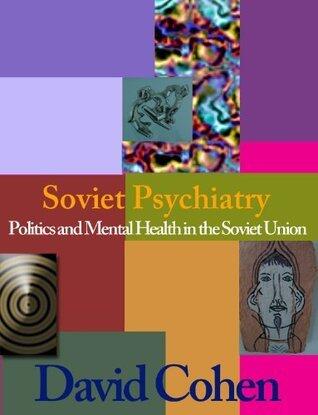
This is a first-hand account of the Soviet Union’s psychiatry as it was practiced in the 1980s and is a must-read for those wishing to know about an important part of Russia’s psychiatric history.
In 1983, the Soviet Association of Neuropathologists and Psychiatrists resigned from the World Psychiatric Association in order to avoid the debate on the political abuse of psychiatry. By the end of the 1980s, ‘perestroika’ had brought profound changes to Soviet psychiatry, and there was general agreement that dissidents were no longer hospitalized. But there remained a backlog of perhaps 150 people in hospital who, to the West, were political prisoners and, to the East, were mentally ill.
The USSR was the most psychiatry-conscious country in the world. It had 25,000 ‘shrinks’, and one citizen in fifty was under their watchful eye. This controversial assessment of Soviet psychiatry set the treatment of dissidents in the context of the way other psychiatric patients were treated at the time.
Filming for a television network, David Cohen was granted unique access to all parts of the Soviet system, including the previous ‘no go’ areas of such notorious institutions as the Serbsky Institute and the Leningrad Special Hospital. As the USSR applied for re-admission to the World Psychiatric Association, his analysis was a timely and disturbing survey of an issue of major international importance.
In 1983, the Soviet Association of Neuropathologists and Psychiatrists resigned from the World Psychiatric Association in order to avoid the debate on the political abuse of psychiatry. By the end of the 1980s, ‘perestroika’ had brought profound changes to Soviet psychiatry, and there was general agreement that dissidents were no longer hospitalized. But there remained a backlog of perhaps 150 people in hospital who, to the West, were political prisoners and, to the East, were mentally ill.
The USSR was the most psychiatry-conscious country in the world. It had 25,000 ‘shrinks’, and one citizen in fifty was under their watchful eye. This controversial assessment of Soviet psychiatry set the treatment of dissidents in the context of the way other psychiatric patients were treated at the time.
Filming for a television network, David Cohen was granted unique access to all parts of the Soviet system, including the previous ‘no go’ areas of such notorious institutions as the Serbsky Institute and the Leningrad Special Hospital. As the USSR applied for re-admission to the World Psychiatric Association, his analysis was a timely and disturbing survey of an issue of major international importance.