Descrizione
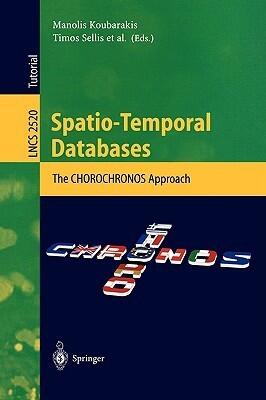
This comprehensive work brings together a diverse group of scholars and researchers who have explored groundbreaking methodologies within spatio-temporal databases. The CHOROCHRONOS approach, devised during an ambitious project funded by the European Commission, offers deep insights into the intricacies of managing and analyzing data that varies with both space and time. The authors, representing a range of expertise in computer science and geographic information systems, delve into innovative strategies and frameworks to optimize the storage, retrieval, and manipulation of dynamic datasets.
Throughout its chapters, the book unfolds a rigorous examination of the challenges inherent in spatio-temporal data. It underscores the significance of diverse applications, from urban planning to environmental monitoring, by emphasizing the role of comprehensive data analysis in decision-making processes. This diversity enriches the text, making it accessible and relevant to academics, practitioners, and anyone interested in the evolution of data management systems.
Additionally, the collaborative nature of the research highlights the potential for interdisciplinary dialogue, inviting readers to consider the interconnectedness of technology, geography, and social patterns. Readers will appreciate detailed discussions on algorithmic developments, theoretical foundations, and practical implementations, each contributing to a richer understanding of the field.
As an essential resource for scholars and professionals, this book not only encapsulates the findings of the CHOROCHRONOS Project but also inspires future research directions, setting a foundation for the next generation of spatio-temporal database innovation.
Throughout its chapters, the book unfolds a rigorous examination of the challenges inherent in spatio-temporal data. It underscores the significance of diverse applications, from urban planning to environmental monitoring, by emphasizing the role of comprehensive data analysis in decision-making processes. This diversity enriches the text, making it accessible and relevant to academics, practitioners, and anyone interested in the evolution of data management systems.
Additionally, the collaborative nature of the research highlights the potential for interdisciplinary dialogue, inviting readers to consider the interconnectedness of technology, geography, and social patterns. Readers will appreciate detailed discussions on algorithmic developments, theoretical foundations, and practical implementations, each contributing to a richer understanding of the field.
As an essential resource for scholars and professionals, this book not only encapsulates the findings of the CHOROCHRONOS Project but also inspires future research directions, setting a foundation for the next generation of spatio-temporal database innovation.
Dettagli del libro
Formato
Brossura
Pagine
372 pagine
Lingua
Inglese
Pubblicato
Aug 4, 2003
Editore
Springer
ISBN-10
3540405526
ISBN-13
9783540405528