

Descrizione
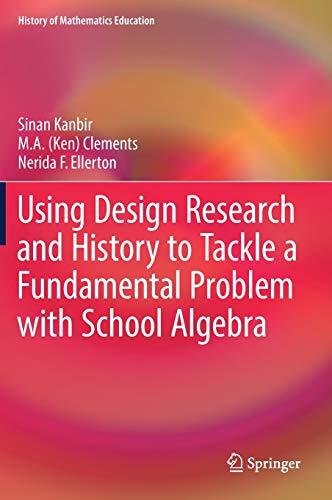
In this insightful exploration, the authors delve deeply into the challenges surrounding school algebra, leveraging both design research and historical context to illuminate the fundamental issues at play. They argue that understanding how algebra has been taught and perceived throughout history can inform more effective teaching strategies today. By analyzing past pedagogical approaches, the authors aim to bridge the gap between traditional methodologies and contemporary educational needs.
This work offers a detailed examination of the evolution of algebra education, presenting a case for the integration of historical insights into the curriculum development process. The authors propose innovative solutions that harness the strengths of both research and history, prompting educators to rethink their practices in a way that fosters a more profound comprehension of algebra among students. Through thoughtful analysis and practical suggestions, this contribution to the history of mathematics education seeks to enhance algebra teaching and ultimately improve student outcomes.
This work offers a detailed examination of the evolution of algebra education, presenting a case for the integration of historical insights into the curriculum development process. The authors propose innovative solutions that harness the strengths of both research and history, prompting educators to rethink their practices in a way that fosters a more profound comprehension of algebra among students. Through thoughtful analysis and practical suggestions, this contribution to the history of mathematics education seeks to enhance algebra teaching and ultimately improve student outcomes.
Dettagli del libro
Formato
Copertina rigida
Pagine
351 pagine
Lingua
Inglese
Pubblicato
nov 16, 2017
Editore
Springer
Edizione
1st ed. 2018
ISBN-10
3319592033
ISBN-13
9783319592039