

本の詳細
形式
ハードカバー
ページ数
208
言語
英語
公開されました
Jan 1, 1990
出版社
World Scientific Publishing Company
ISBN-10
9810200749
ISBN-13
9789810200749
説明
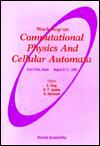
In a gathering that brought together some of the brightest minds in the fields of physics and computer science, this volume captures the essence of the Workshop on Computational Physics and Cellular Automata held in Ouro Preto, Brazil. The discussions and findings shared here delve into the fascinating intersection of computational techniques and cellular automata, a subject that has garnered considerable interest for its ability to model complex systems.
The contributions reflect a rich tapestry of ideas and methodologies, detailing various applications of cellular automata in simulating physical phenomena. Participants at the workshop explored theoretical underpinnings, algorithmic advancements, and practical implementations, fostering a vibrant exchange of knowledge that pushed the boundaries of traditional computational physics.
Through meticulous research and collaborative dialogue, the authors aim to inspire future investigations and enhance understanding in the broader community. This collection serves not only as a record of the event but also as a valuable resource for researchers eager to explore the dynamic interplay between computation and physical modeling.
The contributions reflect a rich tapestry of ideas and methodologies, detailing various applications of cellular automata in simulating physical phenomena. Participants at the workshop explored theoretical underpinnings, algorithmic advancements, and practical implementations, fostering a vibrant exchange of knowledge that pushed the boundaries of traditional computational physics.
Through meticulous research and collaborative dialogue, the authors aim to inspire future investigations and enhance understanding in the broader community. This collection serves not only as a record of the event but also as a valuable resource for researchers eager to explore the dynamic interplay between computation and physical modeling.