

説明
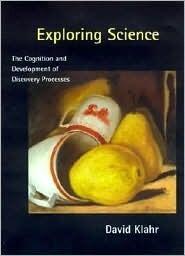
Einstein said that "the whole of science is nothing more than a refinement of everyday thinking." David Klahr suggests that we now know enough about cognition—and hence about everyday thinking—to advance our understanding of scientific thinking. In this book he sets out to describe the cognitive and developmental processes that have enabled scientists to make the discoveries that comprise the body of information we call "scientific knowledge."
Over the past decade Klahr and his colleagues have conducted extensive laboratory experiments in which they create discovery contexts, computer-based environments, to evoke the kind of thinking characteristic of scientific discovery in the "real world." In attempting to solve the problems posed by the discovery tasks, experiment participants (from preschoolers through university students, as well as laypersons) use many of the same higher-order cognitive processes used by practicing scientists. Through this work Klahr integrates two disparate approaches—the content-based approach and the process-based approach—to present a comprehensive model of the psychology of scientific discovery.
Over the past decade Klahr and his colleagues have conducted extensive laboratory experiments in which they create discovery contexts, computer-based environments, to evoke the kind of thinking characteristic of scientific discovery in the "real world." In attempting to solve the problems posed by the discovery tasks, experiment participants (from preschoolers through university students, as well as laypersons) use many of the same higher-order cognitive processes used by practicing scientists. Through this work Klahr integrates two disparate approaches—the content-based approach and the process-based approach—to present a comprehensive model of the psychology of scientific discovery.
本の詳細
形式
ハードカバー
ページ数
239ページ
言語
英語
公開されました
1月 1, 2000
出版社
Bradford Books
版
2 版
ISBN-10
0262112485
ISBN-13
9780262112482