

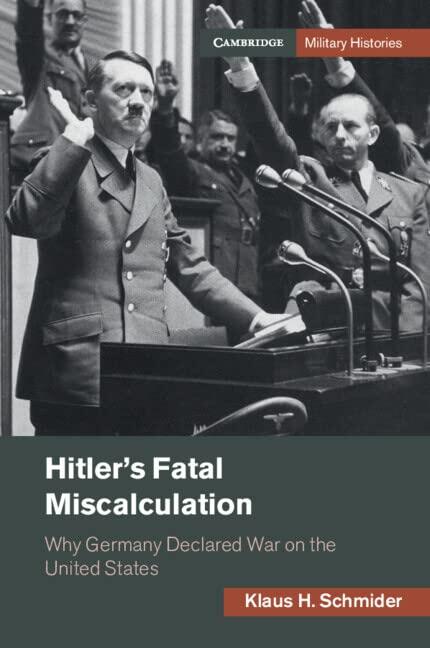
Hitler's Fatal Miscalculation
によって
Klaus H. Schmider
まだ評価がありません
Action & Adventure
History
形式
ペーパーバック
ページ数
614
言語
英語
公開されました
Feb 16, 2023
出版社
Cambridge University Press
ISBN-10
1108792545
ISBN-13
9781108792547
説明
Klaus H. Schmider delves into one of the most pivotal and debated decisions of World War II: Hitler's declaration of war on the United States. This choice, often viewed as a catastrophic error, shifted the balance of power and had profound implications for the conflict. Schmider meticulously examines the political, strategic, and psychological factors that influenced Hitler’s thinking, providing a nuanced perspective on this crucial moment in history.
Through comprehensive research and analysis, the author sheds light on how Hitler’s ambitions and miscalculations ultimately led to a broader confrontation with a nation that possessed immense resources and industrial capabilities. The narrative explores the dynamics within the Nazi regime and the interplay between Hitler’s ideology and the realities of wartime strategy, revealing the complexity of decision-making in the face of rising challenges.
Schmider's work offers readers a fresh understanding of one of history's most infamous leaders and situates Hitler’s misjudgment within the larger context of World War II. By unraveling this critical oversight, he encourages a reassessment of both the war's trajectory and the implications of leadership in times of crisis. This investigative approach captivates history enthusiasts and provides valuable insights for scholars alike.
Through comprehensive research and analysis, the author sheds light on how Hitler’s ambitions and miscalculations ultimately led to a broader confrontation with a nation that possessed immense resources and industrial capabilities. The narrative explores the dynamics within the Nazi regime and the interplay between Hitler’s ideology and the realities of wartime strategy, revealing the complexity of decision-making in the face of rising challenges.
Schmider's work offers readers a fresh understanding of one of history's most infamous leaders and situates Hitler’s misjudgment within the larger context of World War II. By unraveling this critical oversight, he encourages a reassessment of both the war's trajectory and the implications of leadership in times of crisis. This investigative approach captivates history enthusiasts and provides valuable insights for scholars alike.