

本の詳細
形式
電子書籍
言語
英語
公開されました
May 10, 2014
出版社
Vintage
ISBN-10
1299028268
ISBN-13
9781299028265
説明
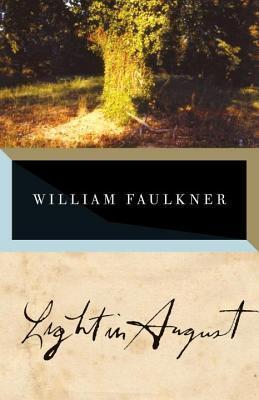
Light in August is a 1932 novel by the American Southern author William Faulkner. It belongs to the Southern gothic and modernist literary genres.
Set in the author's present day, the interwar period, the novel centers around two strangers who arrive at different times to Jefferson, Yoknapatawpha County, Mississippi, a fictional county based on Faulkner's home, Lafayette County, Mississippi. The plot first focuses on Lena Grove, a young pregnant white woman from Alabama looking for the father of her unborn child, and then shifts to explore the life of Joe Christmas, a man who has settled in Jefferson and passes as white, but who secretly believes he has some black ancestry. After a series of flashbacks narrating Christmas's early life, the plot resumes with his living and working with Lucas Burch, the father of Lena's child, who fled to Jefferson and changed his name when he found out that Lena was pregnant. The woman on whose property Christmas and Burch have been living, Joanna Burden, a descendant of Yankee abolitionists hated by the citizens of Jefferson, is murdered. Burch is caught at the scene of the crime and reveals that Christmas had been romantically involved with her and is part black, thus implying that he is guilty of her murder. While Burch sits in jail awaiting his reward for turning in Christmas, Lena is assisted by Byron Bunch, a zealous bachelor who falls in love with her. Bunch seeks the aid of another outcast in the town, the disgraced former minister Gail Hightower, to help Lena give birth and protect Christmas from being lynched. Though Hightower refuses the latter, Christmas escapes to his house and is shot and castrated by a state guardsman. Burch leaves town without his reward, and the novel ends with an anonymous man recounting a story to his wife about some hitchhikers he picked up on the road to Tennessee—a woman with a child and a man who was not the father of the child, both looking for the woman's husband.
In a loose, unstructured modernist narrative style that draws from Christian allegory and oral storytelling, Faulkner explores themes of race, sex, class and religion in the American South. By focusing on characters that are misfits, outcasts, or are otherwise marginalized in their community, he portrays the clash of alienated individuals against a Puritanical, prejudiced rural society. Early reception of the novel was mixed, with some reviewers critical of Faulkner's style and subject matter. However, over time, the novel has come to be considered one of the most important literary works by Faulkner and one of the best English-language novels of the 20th century.
[Reception]
When it was first published in 1932, the novel was moderately successful; 11,000 copies were initially printed, with a total of four printings by the end of the year, although a significant number of copies from the fourth printing had not been sold by 1936. In 1935, Maurice Coindreau translated the novel into French. In the same year, it was translated into German along with several other novels and short stories by Faulkner. These works initially met with approval from the Nazi censors and received much attention from German literary critics, because they assumed that Faulkner was a conservative agrarian positively depicting the struggle for racial purity; soon after, however, Faulkner's works were banned by the Nazis, and post-war German criticism reappraised him as an optimistic Christian humanist.
According to Michael Millgate, though it is not typically considered Faulkner's best novel, Light in August was recognized early on as being "a major text, central to any understanding or evaluation of his career as a whole." Many of the early American critics, most of whom were urban Northerners who viewed the South as backward and reactionary, focused on Faulkner's technical innovation in the field of narrative but missed or ignored the regional details and interconnectedness of the characters and setting to other works by the author. Some reviewers saw Faulkner's narrative techniques not as innovations but as errors, offering Faulkner recommendations on how to improve his style and admonishing him for his European modernist "'tricks'". Critics were also displeased with the violence depicted in the novel, pejoratively labeling it "gothic fantasy," despite the fact that lynching was a reality in the South. In spite of these complaints, the novel came to be viewed positively because of its violence and dark themes, as this was a contrast to the sentimental, romantic Southern literature of the time.
In 1998, the Modern Library ranked Light in August 54th on its list of the 100 best English-language novels of the 20th century. Time magazine included the novel in its TIME 100 Best English-language Novels from 1923 to 2005.
Set in the author's present day, the interwar period, the novel centers around two strangers who arrive at different times to Jefferson, Yoknapatawpha County, Mississippi, a fictional county based on Faulkner's home, Lafayette County, Mississippi. The plot first focuses on Lena Grove, a young pregnant white woman from Alabama looking for the father of her unborn child, and then shifts to explore the life of Joe Christmas, a man who has settled in Jefferson and passes as white, but who secretly believes he has some black ancestry. After a series of flashbacks narrating Christmas's early life, the plot resumes with his living and working with Lucas Burch, the father of Lena's child, who fled to Jefferson and changed his name when he found out that Lena was pregnant. The woman on whose property Christmas and Burch have been living, Joanna Burden, a descendant of Yankee abolitionists hated by the citizens of Jefferson, is murdered. Burch is caught at the scene of the crime and reveals that Christmas had been romantically involved with her and is part black, thus implying that he is guilty of her murder. While Burch sits in jail awaiting his reward for turning in Christmas, Lena is assisted by Byron Bunch, a zealous bachelor who falls in love with her. Bunch seeks the aid of another outcast in the town, the disgraced former minister Gail Hightower, to help Lena give birth and protect Christmas from being lynched. Though Hightower refuses the latter, Christmas escapes to his house and is shot and castrated by a state guardsman. Burch leaves town without his reward, and the novel ends with an anonymous man recounting a story to his wife about some hitchhikers he picked up on the road to Tennessee—a woman with a child and a man who was not the father of the child, both looking for the woman's husband.
In a loose, unstructured modernist narrative style that draws from Christian allegory and oral storytelling, Faulkner explores themes of race, sex, class and religion in the American South. By focusing on characters that are misfits, outcasts, or are otherwise marginalized in their community, he portrays the clash of alienated individuals against a Puritanical, prejudiced rural society. Early reception of the novel was mixed, with some reviewers critical of Faulkner's style and subject matter. However, over time, the novel has come to be considered one of the most important literary works by Faulkner and one of the best English-language novels of the 20th century.
[Reception]
When it was first published in 1932, the novel was moderately successful; 11,000 copies were initially printed, with a total of four printings by the end of the year, although a significant number of copies from the fourth printing had not been sold by 1936. In 1935, Maurice Coindreau translated the novel into French. In the same year, it was translated into German along with several other novels and short stories by Faulkner. These works initially met with approval from the Nazi censors and received much attention from German literary critics, because they assumed that Faulkner was a conservative agrarian positively depicting the struggle for racial purity; soon after, however, Faulkner's works were banned by the Nazis, and post-war German criticism reappraised him as an optimistic Christian humanist.
According to Michael Millgate, though it is not typically considered Faulkner's best novel, Light in August was recognized early on as being "a major text, central to any understanding or evaluation of his career as a whole." Many of the early American critics, most of whom were urban Northerners who viewed the South as backward and reactionary, focused on Faulkner's technical innovation in the field of narrative but missed or ignored the regional details and interconnectedness of the characters and setting to other works by the author. Some reviewers saw Faulkner's narrative techniques not as innovations but as errors, offering Faulkner recommendations on how to improve his style and admonishing him for his European modernist "'tricks'". Critics were also displeased with the violence depicted in the novel, pejoratively labeling it "gothic fantasy," despite the fact that lynching was a reality in the South. In spite of these complaints, the novel came to be viewed positively because of its violence and dark themes, as this was a contrast to the sentimental, romantic Southern literature of the time.
In 1998, the Modern Library ranked Light in August 54th on its list of the 100 best English-language novels of the 20th century. Time magazine included the novel in its TIME 100 Best English-language Novels from 1923 to 2005.
ジャンル
サイエンスフィクション
ホラー
ビジネス&経済