説明
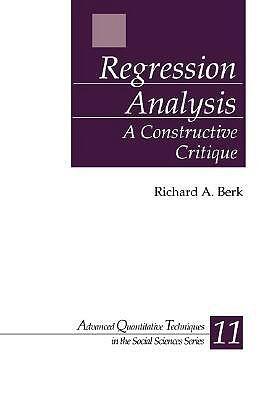
In "Regression Analysis: A Constructive Critique," Richard A. Berk takes readers on a rigorous exploration of the common pitfalls and limitations associated with regression analysis, a widely used statistical method. He presents a thoughtful examination of the assumptions underlying regression models and the potential misinterpretations that can arise when these assumptions fail to hold true. Through clear examples and analytical insights, he highlights the intricate relationship between theory and application, urging a more cautious approach to statistical inference.
Berk's critical lens challenges the conventional wisdom surrounding regression, encouraging scholars and practitioners alike to reassess their methodologies. By dissecting the nuances of model fitting and the consequences of over-reliance on regression outputs, he sparks vital conversations about best practices in data analysis. His aim is not to dismiss regression entirely but rather to refine its application within scientific research.
Ultimately, this work serves as both a cautionary tale and a constructive guide. Berk's perspectives foster a deeper understanding of regression and its role in empirical research, making it an essential resource for anyone seeking to enhance their statistical literacy and analytical skills. This book is particularly valuable for researchers, students, and practitioners who wish to engage critically with the tools of their trade.
Berk's critical lens challenges the conventional wisdom surrounding regression, encouraging scholars and practitioners alike to reassess their methodologies. By dissecting the nuances of model fitting and the consequences of over-reliance on regression outputs, he sparks vital conversations about best practices in data analysis. His aim is not to dismiss regression entirely but rather to refine its application within scientific research.
Ultimately, this work serves as both a cautionary tale and a constructive guide. Berk's perspectives foster a deeper understanding of regression and its role in empirical research, making it an essential resource for anyone seeking to enhance their statistical literacy and analytical skills. This book is particularly valuable for researchers, students, and practitioners who wish to engage critically with the tools of their trade.
本の詳細
形式
ハードカバー
ページ数
280ページ
言語
英語
公開されました
1月 1, 2004
出版社
Sage Publications, inc.
版
3 版
ISBN-10
0761929045
ISBN-13
9780761929048