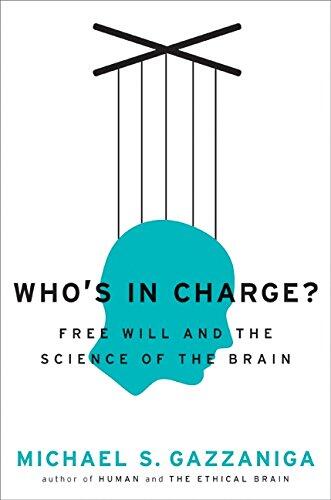
Who's in Charge?: Free Will and the Science of the Brain
によって
Michael S. Gazzaniga
まだ評価がありません
Religion & Spirituality
Science & Technology
Health & Wellness
+1
more
形式
ハードカバー
ページ数
272
言語
英語
公開されました
Nov 15, 2011
出版社
Ecco
版
First Edition
ISBN-10
0061906107
ISBN-13
9780061906107
説明
In this thought-provoking exploration of free will and the brain, the author, a pioneer in cognitive neuroscience, delves into the complexities of human decision-making. He challenges the contemporary views of free will, arguing that our understanding of the brain fundamentally alters how we perceive consciousness and agency. Through a blend of scientific rigor and philosophical inquiry, the narrative invites readers to reconsider their assumptions about choice and control.
By drawing on extensive research and illuminating case studies, he unveils the intricate workings of the brain and how they influence our thoughts and behaviors. The analysis extends beyond the surface, prompting discussions on moral responsibility, ethics, and the implications of neuroscience on our legal systems. The author’s accessible style ensures that even those unfamiliar with the scientific jargon can engage with the material and ponder its profound implications.
As the narrative unfolds, it becomes evident that the author is not simply dismantling traditional notions but also advocating for a deeper understanding of human nature. He emphasizes the importance of acknowledging the biological foundations of our thoughts while maintaining a sense of responsibility and accountability.
In this compelling work, readers are invited on a journey that bridges science and philosophy, offering a fresh perspective on the age-old debate surrounding free will. The intricate relationship between the brain and decision-making stands at the forefront, ensuring that the discourse remains relevant and impactful.
By drawing on extensive research and illuminating case studies, he unveils the intricate workings of the brain and how they influence our thoughts and behaviors. The analysis extends beyond the surface, prompting discussions on moral responsibility, ethics, and the implications of neuroscience on our legal systems. The author’s accessible style ensures that even those unfamiliar with the scientific jargon can engage with the material and ponder its profound implications.
As the narrative unfolds, it becomes evident that the author is not simply dismantling traditional notions but also advocating for a deeper understanding of human nature. He emphasizes the importance of acknowledging the biological foundations of our thoughts while maintaining a sense of responsibility and accountability.
In this compelling work, readers are invited on a journey that bridges science and philosophy, offering a fresh perspective on the age-old debate surrounding free will. The intricate relationship between the brain and decision-making stands at the forefront, ensuring that the discourse remains relevant and impactful.