

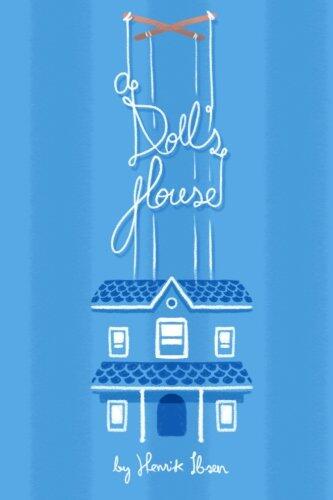
설명
The play is significant for its critical attitude toward 19th century marriage norms. It aroused great controversy at the time, as it concludes with the protagonist, Nora, leaving her husband and children because she wants to discover herself. Ibsen was inspired by the belief that "a woman cannot be herself in modern society," since it is "an exclusively male society, with laws made by men and with prosecutors and judges who assess feminine conduct from a masculine standpoint." Its ideas can also be seen as having a wider Michael Meyer argued that the play's theme is not women's rights, but rather "the need of every individual to find out the kind of person he or she really is and to strive to become that person." In a speech given to the Norwegian Association for Women's Rights in 1898, Ibsen insisted that he "must disclaim the honor of having consciously worked for the women's rights movement," since he wrote "without any conscious thought of making propaganda," his task having been "the description of humanity."
In 2006, the centennial of Ibsen's death, A Doll's House held the distinction of being the world's most performed play. UNESCO has inscribed Ibsen's autographed manuscripts of A Doll's House on the Memory of the World Register in 2001, in recognition of their historical value.
“You have never loved me. You have only thought it pleasant to be in love with me.”
Henrik Ibsen, A Doll's House
책 세부 정보
장르들
리뷰
모두 보기
I still love it like I did when I was 19 reading it in my first year in college. I honestly understand it more now than I did then. At first I didn't like the fact she left the kids but now I understand why. She never felt like she was mother to them in the first place which she said. She always felt like they were her playthings like her father and then her husband treated her. It's not to say that once she discover who she truly is and what she believe that she won't come back for her kids and be a mother to them. I believe she would but she have to find herself in order to do that. This is why this play is consider fenmist cause at the end Nora did something that some women at that time dream of doing. Leaving to find themselves in this world. So A Doll's House is still one of my faves.