책 세부 정보
형식
페이퍼백
페이지
280
언어
영어
출판됨
Apr 14, 2014
출판사
Cambridge University Press
ISBN-10
1107603579
ISBN-13
9781107603578
설명
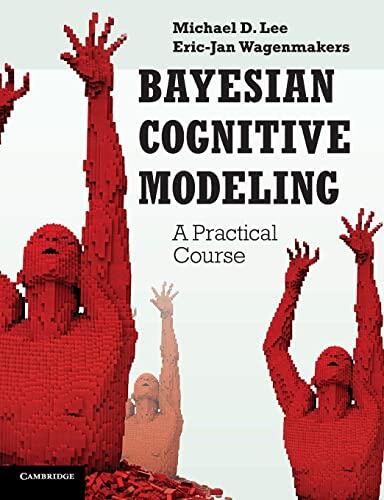
This guide serves as an essential resource for those venturing into the world of Bayesian cognitive modeling. It opens up a world of sophisticated statistical techniques that help decipher the complexities of human cognition. The authors, Michael D. Lee and Eric-Jan Wagenmakers, bring their extensive expertise to offer readers a hands-on approach, bridging theory with practical application.
The narrative unfolds with an introduction to Bayesian principles, demystifying the intricate concepts involved. With clear explanations and illustrative examples, it leads readers through the foundational ideas, providing a solid grounding in the subject. Each chapter builds upon the last, gradually introducing more advanced modeling techniques that highlight the versatility and power of Bayesian methods in cognitive science.
Readers will find illustrative case studies interspersed throughout the text, showcasing real-world applications that make the learning process engaging and relatable. This practical orientation ensures that both novices and experienced researchers can derive value, fostering a deeper understanding of how these statistical tools can be employed to gain insights into cognitive processes.
By the end of the course, readers will not only have a firm grasp of Bayesian modeling concepts but also the confidence to apply these techniques in their own research. This book truly serves as a significant stepping stone for anyone interested in exploring the realm of cognitive modeling and its implications for understanding the human mind.
The narrative unfolds with an introduction to Bayesian principles, demystifying the intricate concepts involved. With clear explanations and illustrative examples, it leads readers through the foundational ideas, providing a solid grounding in the subject. Each chapter builds upon the last, gradually introducing more advanced modeling techniques that highlight the versatility and power of Bayesian methods in cognitive science.
Readers will find illustrative case studies interspersed throughout the text, showcasing real-world applications that make the learning process engaging and relatable. This practical orientation ensures that both novices and experienced researchers can derive value, fostering a deeper understanding of how these statistical tools can be employed to gain insights into cognitive processes.
By the end of the course, readers will not only have a firm grasp of Bayesian modeling concepts but also the confidence to apply these techniques in their own research. This book truly serves as a significant stepping stone for anyone interested in exploring the realm of cognitive modeling and its implications for understanding the human mind.
장르들
과학 & 기술
심리학