설명
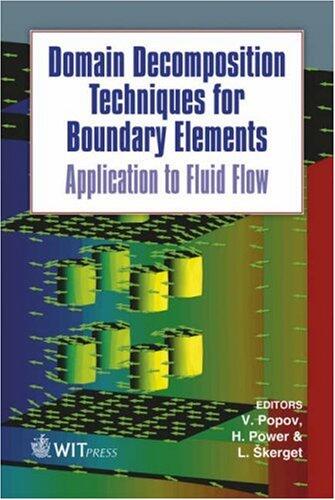
This work delves into the evolving field of boundary element methods, focusing on the integration of sub-domain techniques as a powerful tool for numerical modeling. The authors explore how these techniques enhance the analysis of fluid flow, providing a comprehensive assessment of their applications within this specific context.
By breaking complex problems into manageable sub-domains, the text illustrates how researchers and engineers can achieve higher accuracy and efficiency in their simulations. Through detailed discussions and case studies, the authors shed light on the practicalities and advantages of implementing domain decomposition methods, making this resource essential for both newcomers and seasoned professionals seeking to refine their approach to boundary element analysis in fluid dynamics. The insights presented pave the way for advancements in computational methods, reinforcing the importance of innovation in predictive modeling.
By breaking complex problems into manageable sub-domains, the text illustrates how researchers and engineers can achieve higher accuracy and efficiency in their simulations. Through detailed discussions and case studies, the authors shed light on the practicalities and advantages of implementing domain decomposition methods, making this resource essential for both newcomers and seasoned professionals seeking to refine their approach to boundary element analysis in fluid dynamics. The insights presented pave the way for advancements in computational methods, reinforcing the importance of innovation in predictive modeling.
책 세부 정보
형식
하드커버
페이지
320 페이지
언어
영어
출판됨
May 30, 2007
출판사
WIT Press / Computational Mechanics
판
1
ISBN-10
1845641000
ISBN-13
9781845641009