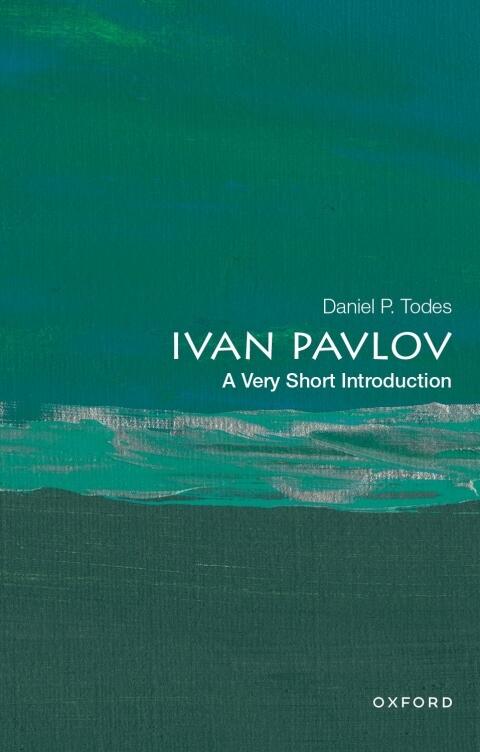
Ivan Pavlov: A Very Short Introduction
작성자
Daniel P. Todes
아직 평점이 없습니다
Romance
Biography
Action & Adventure
+3
more
형식
킨들
페이지
160
언어
영어
출판됨
Jan 1, 2022
출판사
Oxford University Press
판
3
ISBN-10
0190906715
ISBN-13
9780190906719
설명
Daniel P. Todes explores the remarkable life and groundbreaking work of Ivan Pavlov, the renowned Russian physiologist known for his pioneering studies in classical conditioning. This concise introduction captures the essence of Pavlov's contributions to psychology and physiology, highlighting his famous experiments with dogs that revealed the mechanisms of learning through association.
Todes delves into Pavlov's background, providing insight into his early influences and the scientific landscape of his time. Readers are taken on a journey through Pavlov's career, examining how his meticulous experimental methods laid the groundwork for modern behavioral psychology. The book presents an engaging narrative that balances scientific detail with accessible explanations, making it suitable for both scholars and casual readers.
Pavlov's work transcended the boundaries of biology, prompting discussions in philosophy and the social sciences. Through Todes’ lens, the enduring impact of Pavlov's discoveries is thoughtfully analyzed, demonstrating how they continue to resonate in contemporary studies of human and animal behavior.
Overall, the introduction serves as a tribute to an iconic figure, illuminating not just the man himself but the revolutionary ideas that have shaped our understanding of learning processes. It offers a brief yet rich perspective on the life of someone who fundamentally changed the way we think about the mind and behavior.
Todes delves into Pavlov's background, providing insight into his early influences and the scientific landscape of his time. Readers are taken on a journey through Pavlov's career, examining how his meticulous experimental methods laid the groundwork for modern behavioral psychology. The book presents an engaging narrative that balances scientific detail with accessible explanations, making it suitable for both scholars and casual readers.
Pavlov's work transcended the boundaries of biology, prompting discussions in philosophy and the social sciences. Through Todes’ lens, the enduring impact of Pavlov's discoveries is thoughtfully analyzed, demonstrating how they continue to resonate in contemporary studies of human and animal behavior.
Overall, the introduction serves as a tribute to an iconic figure, illuminating not just the man himself but the revolutionary ideas that have shaped our understanding of learning processes. It offers a brief yet rich perspective on the life of someone who fundamentally changed the way we think about the mind and behavior.