

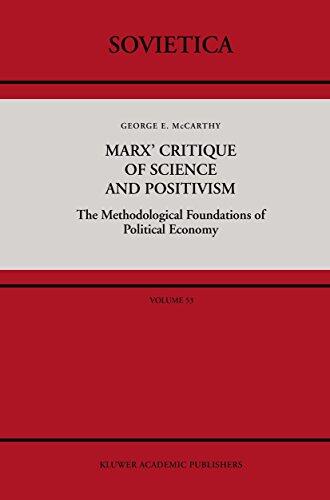
Marx’ Critique of Science and Positivism: The Methodological Foundations of Political Economy
작성자
G. McCarthy
아직 평점이 없습니다
형식
킨들
페이지
242
언어
네덜란드어, 플라망어
출판됨
Jan 1, 2012
출판사
Springer
판
1988
ISBN-10
9400929455
ISBN-13
9789400929456
설명
G. McCarthy delves into the intricate relationship between Marx's critique of science and his views on positivism, analyzing the foundational methodologies that underpin political economy. The author presents a thorough examination of Marx's ideas, exploring how they challenge the prevailing scientific paradigms of his time. By dissecting these critiques, McCarthy offers insights into how Marx redefined the role of science in understanding economic systems and social structures.
Throughout the exploration, the complexities of Marx's philosophy are laid bare, revealing the tensions between empirical observation and the theoretical frameworks that inform political analysis. McCarthy argues that Marx does not dismiss science outright but rather seeks to reposition it within a broader context that emphasizes historical materialism and societal change. This nuanced perspective is vital for understanding the evolution of Marxist thought and its ongoing relevance in contemporary discussions around economics and social justice.
Readers are invited to reflect on the implications of Marx's critiques for modern-day scientific inquiry and economic theory. By situating these ideas within the historical context, McCarthy ultimately contributes to a richer understanding of political economy and the continuous dialogue between theoretical constructs and empirical realities.
Throughout the exploration, the complexities of Marx's philosophy are laid bare, revealing the tensions between empirical observation and the theoretical frameworks that inform political analysis. McCarthy argues that Marx does not dismiss science outright but rather seeks to reposition it within a broader context that emphasizes historical materialism and societal change. This nuanced perspective is vital for understanding the evolution of Marxist thought and its ongoing relevance in contemporary discussions around economics and social justice.
Readers are invited to reflect on the implications of Marx's critiques for modern-day scientific inquiry and economic theory. By situating these ideas within the historical context, McCarthy ultimately contributes to a richer understanding of political economy and the continuous dialogue between theoretical constructs and empirical realities.