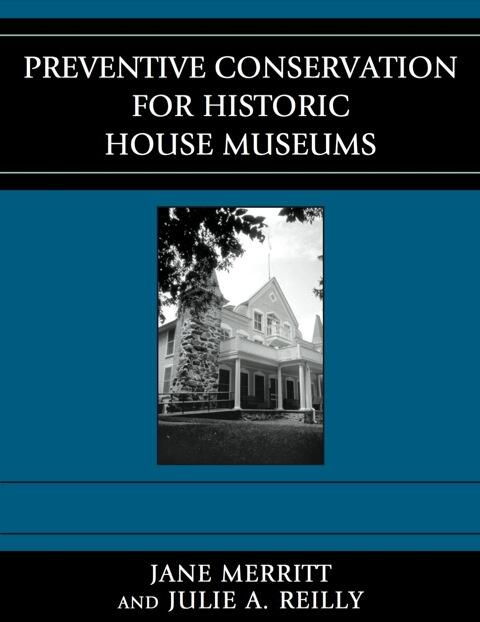
Preventive Conservation for Historic House Museums
작성자
Jane Merritt
,
Julie A. Reilly
아직 평점이 없습니다
History
Business & Economics
Art & Photography
형식
킨들
페이지
216
언어
영어
출판됨
Jan 1, 2010
출판사
Rowman & Littlefield Publishers
판
2
ISBN-10
0759119414
ISBN-13
9780759119413
설명
This insightful guide offers essential knowledge for those who oversee historic house museums, emphasizing the importance of preventive conservation practices. With a focus on safeguarding collections and the integrity of historic buildings, the authors delve into strategies that can be implemented to protect these valuable sites from the inevitable wear and environmental stressors that come with time.
The book combines theoretical frameworks with practical applications, making it accessible to both seasoned professionals and newcomers in the field. Through a series of case studies and real-life examples, readers gain a deeper understanding of how to assess risks and develop customized conservation plans tailored to the unique characteristics of their museums.
Merritt and Reilly provide actionable tips for maintaining conditions that preserve not just the physical structures but also the narratives they represent. The emphasis on collaboration among staff and stakeholders highlights the communal aspect of conservation efforts, fostering a shared responsibility for these irreplaceable treasures.
A valuable resource for museum administrators, curators, and conservators, this work stands as a vital contribution to the dialogue of historic preservation. It invites readers to rethink their approach, encouraging a proactive stance towards the care and management of their heritage sites, ensuring that future generations can enjoy and learn from these important cultural landmarks.
The book combines theoretical frameworks with practical applications, making it accessible to both seasoned professionals and newcomers in the field. Through a series of case studies and real-life examples, readers gain a deeper understanding of how to assess risks and develop customized conservation plans tailored to the unique characteristics of their museums.
Merritt and Reilly provide actionable tips for maintaining conditions that preserve not just the physical structures but also the narratives they represent. The emphasis on collaboration among staff and stakeholders highlights the communal aspect of conservation efforts, fostering a shared responsibility for these irreplaceable treasures.
A valuable resource for museum administrators, curators, and conservators, this work stands as a vital contribution to the dialogue of historic preservation. It invites readers to rethink their approach, encouraging a proactive stance towards the care and management of their heritage sites, ensuring that future generations can enjoy and learn from these important cultural landmarks.