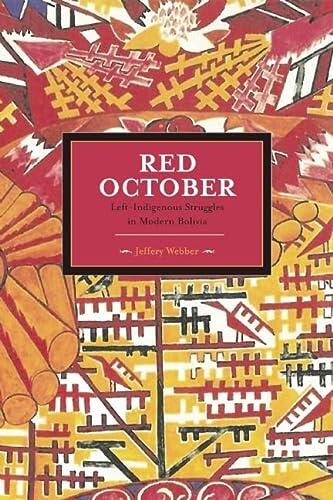
Red October: Left-Indigenous Struggles in Modern Bolivia
아직 평점이 없습니다
형식
페이퍼백
페이지
376
언어
영어
출판됨
Nov 13, 2012
출판사
Haymarket Books
판
Reprint
ISBN-10
1608462587
ISBN-13
9781608462582
설명
In the intricate landscape of Bolivia's political and social fabric, a powerful narrative unfolds, detailing the intersection of leftist movements and Indigenous struggles. The exploration delves deep into the historical roots that have shaped contemporary political discourse, revealing the complexities faced by Indigenous communities in their quest for recognition and rights. The author meticulously examines how these groups have navigated and challenged the forces of imperialism and globalization, advocating for their place within a rapidly changing society.
Through a blend of historical analysis and contemporary observation, the writer articulates the struggles of Indigenous peoples and their alliances with leftist movements. This dynamic interplay reveals the nuanced relationships that evolve between social classes and ethnic identities, illustrating not just a fight for survival but also for identity and autonomy. Each chapter sheds light on pivotal moments, reshaping the understanding of social movements in a country marked by a rich cultural heritage.
The author also emphasizes the importance of solidarity, illustrating how alliances can bolster collective action. As communities come together, they draw strength from their shared history, fostering resilience amid external pressures. This overarching theme of unity among diverse groups provides a hopeful message amid the often tumultuous landscape of Bolivian politics.
With a compelling narrative that combines scholarly rigor with accessible writing, this work serves as a critical resource for those seeking to understand the ongoing struggles of marginalized populations in Bolivia. It challenges readers to reflect on the broader implications of these movements, urging a deeper understanding of the connections between past injustices and present realities.
Through a blend of historical analysis and contemporary observation, the writer articulates the struggles of Indigenous peoples and their alliances with leftist movements. This dynamic interplay reveals the nuanced relationships that evolve between social classes and ethnic identities, illustrating not just a fight for survival but also for identity and autonomy. Each chapter sheds light on pivotal moments, reshaping the understanding of social movements in a country marked by a rich cultural heritage.
The author also emphasizes the importance of solidarity, illustrating how alliances can bolster collective action. As communities come together, they draw strength from their shared history, fostering resilience amid external pressures. This overarching theme of unity among diverse groups provides a hopeful message amid the often tumultuous landscape of Bolivian politics.
With a compelling narrative that combines scholarly rigor with accessible writing, this work serves as a critical resource for those seeking to understand the ongoing struggles of marginalized populations in Bolivia. It challenges readers to reflect on the broader implications of these movements, urging a deeper understanding of the connections between past injustices and present realities.