

책 세부 정보
형식
전자책
페이지
256
언어
영어
출판됨
May 14, 2013
출판사
University Press of Florida
ISBN-10
0813048400
ISBN-13
9780813048406
설명
In January 2002, under orders from the Bush administration, twenty prisoners were selected from a much larger group to be transported to special facility in Cuba. Over the next several years, the Guantanamo Bay Naval Base in the southeastern corner of the island was transformed into a prison camp housing approximately seven hundred detainees captured during the war in Afghanistan. The men, some just boys when first captured, have been subjected to a range of sophisticated physical and psychological tortures, held incommunicado and indefinitely. More than a decade later, many are still threatened with prosecution yet denied minimal due process rights.
In the aftermath of 9/11, few questioned the political narrative provided by the White House about Guantanamo and the steady stream of prisoners delivered there from half a world away. The Bush administration gave various rationales for the detention of prisoners captured in the War on Terror: they represented extraordinary threats to the American people, possessed valuable enemy intelligence, and were awaiting prosecution for terrorism or war crimes. The prisoners were exhibited to politicians, diplomats, and other elites. Even the press was given a glimpse of the shackled men in orange jumpsuits. Both explicitly and implicitly, journalists, pundits, lawyers, academics, and even released prisoners who authored books about the island prison endorsed elements of the official narrative.
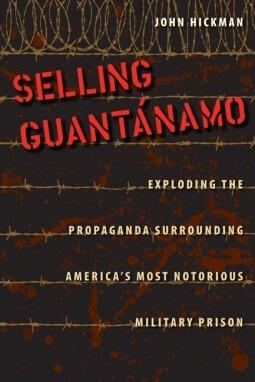
In Selling Guantanamo, John Hickman exposes the holes in this manufactured story. He shines a spotlight on the critical actors, including Donald Rumsfeld, Dick Cheney, and President George Bush himself, and examines how the facts belie the “official” accounts. He chastises the apologists and the critics of the administration, arguing that both failed to see the forest for the trees.
By looking at historical examples of prisoners held in continued custody during asymmetric conflicts and national security crises Hickman unravels the putative from the proven and reveals exactly why the current internment of prisoners at the infamous naval base is so unprecedented and unique. Constructing his argument from the existing domestic and international record, he offers an alternate theory that completely contradicts the narrative spun by the Bush administration: the prisoners were put on display as symbols of military victory, punished as substitutes for the architects of 9/11 who remained at large, and used as pawns in a neoconservative move to signal a new U.S. foreign policy that ignored the United Nations, disregarded the Geneva Conventions, and scoffed at the International Criminal Court.
In the aftermath of 9/11, few questioned the political narrative provided by the White House about Guantanamo and the steady stream of prisoners delivered there from half a world away. The Bush administration gave various rationales for the detention of prisoners captured in the War on Terror: they represented extraordinary threats to the American people, possessed valuable enemy intelligence, and were awaiting prosecution for terrorism or war crimes. The prisoners were exhibited to politicians, diplomats, and other elites. Even the press was given a glimpse of the shackled men in orange jumpsuits. Both explicitly and implicitly, journalists, pundits, lawyers, academics, and even released prisoners who authored books about the island prison endorsed elements of the official narrative.
In Selling Guantanamo, John Hickman exposes the holes in this manufactured story. He shines a spotlight on the critical actors, including Donald Rumsfeld, Dick Cheney, and President George Bush himself, and examines how the facts belie the “official” accounts. He chastises the apologists and the critics of the administration, arguing that both failed to see the forest for the trees.
By looking at historical examples of prisoners held in continued custody during asymmetric conflicts and national security crises Hickman unravels the putative from the proven and reveals exactly why the current internment of prisoners at the infamous naval base is so unprecedented and unique. Constructing his argument from the existing domestic and international record, he offers an alternate theory that completely contradicts the narrative spun by the Bush administration: the prisoners were put on display as symbols of military victory, punished as substitutes for the architects of 9/11 who remained at large, and used as pawns in a neoconservative move to signal a new U.S. foreign policy that ignored the United Nations, disregarded the Geneva Conventions, and scoffed at the International Criminal Court.
장르들
액션 & 어드벤처
역사