설명
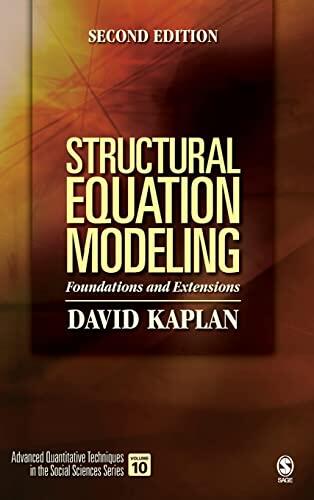
David W. Kaplan’s insightful work serves as a cornerstone for those delving into the intricate world of structural equation modeling. With an engaging approach, Kaplan distills complex concepts into accessible insights, making it an essential read for both novice researchers and seasoned social scientists. This updated edition reflects the latest advancements in the field while remaining grounded in foundational principles.
The author meticulously outlines the theoretical underpinnings of structural equation modeling, while also providing practical applications that highlight its relevance across various social science disciplines. Readers are guided through an array of topics, including model specification, estimation, and validation—each explained with clarity and depth. Kaplan’s expertise shines as he bridges the gap between theory and real-world application, ensuring that even the most intricate models can be understood and utilized effectively.
Moreover, Kaplan addresses common challenges and pitfalls, equipping readers with strategies to navigate complexities in their research. The book is rich with examples and case studies, allowing readers to witness structural equation modeling in action and solidify their understanding of the material.
Overall, this edition of Kaplan’s celebrated text is not just a manual for methodologies; it is a comprehensive guide that empowers social scientists to enhance their research capabilities. It solidifies its place as a crucial resource for anyone aiming to master the art of structural equation modeling in their scholarly pursuits.
The author meticulously outlines the theoretical underpinnings of structural equation modeling, while also providing practical applications that highlight its relevance across various social science disciplines. Readers are guided through an array of topics, including model specification, estimation, and validation—each explained with clarity and depth. Kaplan’s expertise shines as he bridges the gap between theory and real-world application, ensuring that even the most intricate models can be understood and utilized effectively.
Moreover, Kaplan addresses common challenges and pitfalls, equipping readers with strategies to navigate complexities in their research. The book is rich with examples and case studies, allowing readers to witness structural equation modeling in action and solidify their understanding of the material.
Overall, this edition of Kaplan’s celebrated text is not just a manual for methodologies; it is a comprehensive guide that empowers social scientists to enhance their research capabilities. It solidifies its place as a crucial resource for anyone aiming to master the art of structural equation modeling in their scholarly pursuits.
책 세부 정보
형식
하드커버
페이지
272 페이지
언어
영어
출판됨
7월 23, 2008
출판사
SAGE Publications, Inc
판
2nd
판본
판본 3개
ISBN-10
1412916240
ISBN-13
9781412916240