

책 세부 정보
형식
하드커버
페이지
225
언어
영어
출판됨
Nov 1, 2001
출판사
MIT Press
ISBN-10
0262083043
ISBN-13
9780262083041
설명
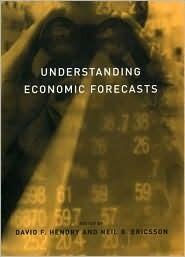
Historically, the theory of forecasting that underpinned actual practice in economics has been based on two key assumptions--that the model was a good representation of the economy and that the structure of the economy would remain relatively unchanged. In reality, forecast models are mis-specified, the economy is subject to unanticipated shifts, and the failure to make accurate predictions is relatively common. In the last decade, economists have developed new theories of economic forecasting and additional methods of forecast evaluation that make less stringent assumptions. These theories and methods acknowledge that the economy is dynamic and prone to sudden shifts. They also recognize that forecasting models, however good, are greatly simplified representations that will be incorrect in some respects. One advantage of these newer approaches is that we can now account for the different results of competing forecasts. In this book academic specialists, practitioners, and a financial journalist explain these new developments in economic forecasting. The authors discuss how forecasting is conducted, evaluated, reported, and applied by academic, private, and governmental bodies, as well as how forecasting might be taught and what costs are induced by forecast errors. They also describe how econometric models for forecasting are constructed, how properties of forecasting methods can be analyzed, and what the future of economic forecasting may bring.
장르들
비즈니스 & 경제