

Boekdetails
Formaat
Paperback
Pagina's
880
Taal
Engels
Gepubliceerd
Jul 15, 2013
Uitgever
Springer
Editie
2013
ISBN-10
3642392067
ISBN-13
9783642392054
Beschrijving
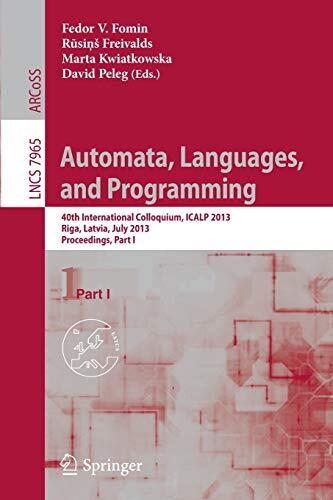
In a pivotal gathering of experts in the fields of automata, languages, and programming, this compilation presents groundbreaking research from the 40th International Colloquium. Held in the picturesque city of Riga, Latvia, the conference facilitated stimulating discussions on the theoretical underpinnings and practical applications of computer science. Contributions from leading scholars reflect the latest advancements and innovations in algorithmic theory, complexity, and formal languages.
The collection is meticulously assembled into two volumes, showcasing both peer-reviewed papers and vibrant discussions that took place during the colloquium. Each paper addresses critical inquiries, presenting novel methodologies and results that push the boundaries of contemporary computer science scholarship. Readers will find a wealth of knowledge that not only enhances academic comprehension but also provides insights applicable to real-world computational challenges.
As researchers delve into these proceedings, they will discover a tapestry of ideas that intertwine various aspects of computer science. The work stands as a testament to the evolving landscape of technology and the importance of collaboration among scholars across the globe to further the discipline's advancement.
This reflective documentation serves as both a historical account of the 2013 colloquium and a valuable resource for future research in automata and programming languages. The detailed proceedings ensure that the knowledge shared during this critical event continues to reverberate within the field for years to come.
The collection is meticulously assembled into two volumes, showcasing both peer-reviewed papers and vibrant discussions that took place during the colloquium. Each paper addresses critical inquiries, presenting novel methodologies and results that push the boundaries of contemporary computer science scholarship. Readers will find a wealth of knowledge that not only enhances academic comprehension but also provides insights applicable to real-world computational challenges.
As researchers delve into these proceedings, they will discover a tapestry of ideas that intertwine various aspects of computer science. The work stands as a testament to the evolving landscape of technology and the importance of collaboration among scholars across the globe to further the discipline's advancement.
This reflective documentation serves as both a historical account of the 2013 colloquium and a valuable resource for future research in automata and programming languages. The detailed proceedings ensure that the knowledge shared during this critical event continues to reverberate within the field for years to come.