Boekdetails
Formaat
Paperback
Pagina's
360
Taal
Engels
Gepubliceerd
Jul 25, 2008
Uitgever
Pearson
Editie
2
ISBN-10
0205609457
ISBN-13
9780205609451
Beschrijving
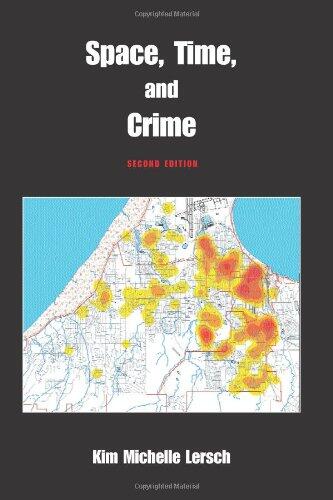
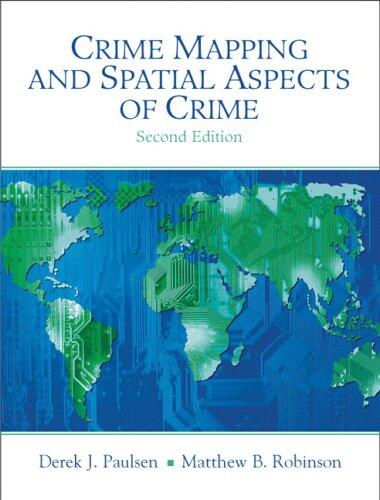
In the second edition of this compelling work, readers are invited to explore the intricate relationship between crime and geography. This book delves into the methods and implications of crime mapping, offering a rich tapestry of insights that illuminate how spatial factors influence criminal behavior. It serves as a vital resource for students, practitioners, and researchers alike, revealing the importance of understanding crime within its geographic context.
Matthew B. Robinson and Derek J. Paulsen skillfully present a blend of theory and practical application, reinforcing the significance of data-driven approaches in crime analysis. They discuss various mapping techniques and technologies that enhance law enforcement strategies and aid in crime prevention. Their approach encourages a comprehensive view, urging readers to consider how social, economic, and environmental variables intersect with criminal activities.
As the text evolves, it addresses contemporary challenges and advances in the field, including the integration of new technologies and methodologies. The authors invite readers to think critically about how geography shapes crime and public safety, making it essential for those engaged in crime analysis or urban planning.
Rich in case studies and examples, the work not only educates but also inspires fresh thinking about the role of spatial considerations in crime management. Whether one is a novice or an experienced professional in criminology, this edition provides valuable tools to navigate an increasingly complex landscape of crime mapping.
Matthew B. Robinson and Derek J. Paulsen skillfully present a blend of theory and practical application, reinforcing the significance of data-driven approaches in crime analysis. They discuss various mapping techniques and technologies that enhance law enforcement strategies and aid in crime prevention. Their approach encourages a comprehensive view, urging readers to consider how social, economic, and environmental variables intersect with criminal activities.
As the text evolves, it addresses contemporary challenges and advances in the field, including the integration of new technologies and methodologies. The authors invite readers to think critically about how geography shapes crime and public safety, making it essential for those engaged in crime analysis or urban planning.
Rich in case studies and examples, the work not only educates but also inspires fresh thinking about the role of spatial considerations in crime management. Whether one is a novice or an experienced professional in criminology, this edition provides valuable tools to navigate an increasingly complex landscape of crime mapping.
Genres
Mysterie
Misdaad