

Beschrijving
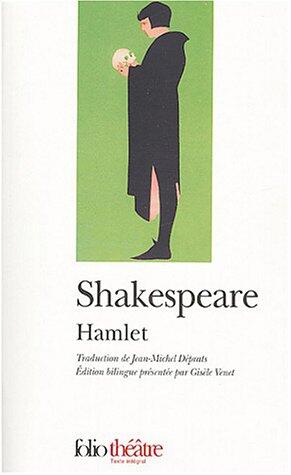
This edition, thoughtfully presented and annotated by Gisèle Ve, offers readers valuable insights into the text, enhancing their understanding of Shakespeare's intricate language and themes. Jean-Michel Déprats' skilled translation brings a fresh perspective, ensuring that the depth of Hamlet's reflections resonates powerfully with contemporary audiences. Amidst the backdrop of political intrigue and moral ambiguity, the narrative compels readers to explore the fundamental questions of life, death, and the human condition.
Boekdetails
Genres
Recensies
Bekijk Alles
I was brought up reading Shakespeare from an early age as my late father was an English teacher and wanted me to be ‘well read’ and Macbeth was one of my favourites as he would sometimes read the parts with me in his Scottish accent. So when I saw that there were Manga versions of the Shakespeare plays I was curious as to how something that’s traditionally told on the stage would come across in this medium.
I loved it.
The artwork is so well done, and the language of William Shakespeare is woven well into the storytelling, I think these books would be perfect for students who were struggling with the more traditional methods of telling the tale of an overly ambitious laird who murders his way onto the Scottish crown. The emotions the characters experience are so vivid thanks to the style of the artwork and helped draw you into this centuries old tale.
These books should be available in every school library and are a fantastic way of telling stories that even after all these years still draw in so many readers or attendees of the plays in. Whether you’re new to the tales or not - I think these are a great read for any age.

This was the first Jane Austen novel I ever read, and it retains a special place in my heart because of that. Well, not entirely because of that. To be honest, it deserves a special place in my heart entirely on its own merits, and I always debate between this and Northanger Abbey as my favorite of her novels. Here, it is the characters that draw me in. I love Elinor. I really do. I want to be Elinor. She is brilliant and poised and handles even the worst of things with aplomb. She is an artist and a reader and a first-born child who understands what that means and how having younger siblings gives you a certain requirement to look after them as best you can, and all of the sufferings that that can entail. She is a good sister to Marianne, who has a host of problematic behavioral issues (the titular "sensibility" is the cause of most of these), even when Marianne is not a good sister to her. At the same time, I feel for Marianne, I truly do. She goes through an awful lot of trouble because of the way she wears her heart on the sleeve, and while I'm pleased everything came out okay in the end (let's be honest and admit this is not a spoiler--if you are reading Jane Austen for anything other than happy endings of some sort, I'm not sure what you are thinking), it was rough going for quite some time, and much of it was her own fault. I will not pardon the behavior of certain others, of course, who ought to have known better and who certainly have an awful lot to answer for, but Marianne could have perhaps prevented intentionally increasing her own suffering at several points. It was not healthy, and it was not easy to read. The side characters are, as always, remarkably lively and feel like just barely caricatured versions of people that exist even now. I'd buy them living in a small town in the 1800's, and I'd buy them working in an office building with me now. Everyone has a Mrs. Jennings in their life somewhere, I feel quite sure of it. Lucy was intriguing enough, and listening to her instead of reading her gave an interesting interpretation to certain of her phrasings I don't think I had quite understood. I quite enjoyed the ending, though I did find one aspect,<spoiler>the suggestion that Colonel Brandon was "owed" Marianne for his help to the family, </spoiler>to be a bit out-of-touch. Admittedly, given I was rooting for that anyway, I am okay with assuming that things worked out okay and all was happy in the end. The rest of the ending was definitely satisfactory. I really enjoyed listening to this (and had no clue I had apparently spent half a day doing so...); I'm quite getting into audiobooks, I think, and Juliet Stevenson's Jane Austen readings are a large chunk of the reason why. She does each character with just the right tone that you recognize them, but without ever seeming to over-do it, and she somehow makes pieces of the text pop alive in ways I had not previously considered simply by how she speaks. She catches the tone of the work perfectly and has become my go-to Austen narrator. If you've read any Jane Austen and enjoyed it, make sure to pick this up. If you haven't, then this is a great introduction to her work, whether you read or listen.

The novel follows the 18th century antithetical pattern suggested by the formula of its title, and which gives two characters, sincerely attached to one another, opposing qualities of temperament and mind. Accordingly, the Dashwood sisters, namely Elinor and Marianne, represent the antithetical characters who respectively embody collected sense and prodigal sensibility. The novel addresses many societal issues such as greed and the importance of economic and social status. John Dashwood, for one, falls readily into the clutches of the former vice. His selfishness makes him disregard his father's last wishes in connection with providing for his sisters. Consequently, the girls accompany their mother to retirement in a very humble abode in Devonshire in spite of their right to partake of their father's wealth. This greed for money strongly impacts the realm of matrimony as well. Willoughby, for instance, leaves Marianne in order to marry an heiress. The latter is found to be inferior to Marianne in all respects, but her money makes of her a most suitable wife in the eyes of Willoughby. According to critics, the prominent flaw in Austen's first novel can be found in the polarities of Marianne and Elinor, which are too antithetical to be plausible as dynamic portraits of human beings.