

Boekdetails
Beschrijving
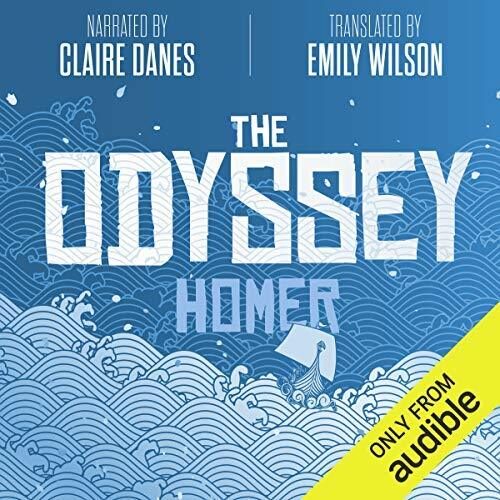
The first great adventure story in the Western canon, The Odyssey is a poem about violence and the aftermath of war; about wealth, poverty, and power; about marriage and family; about travelers, hospitality, and the yearning for home.
In this fresh, authoritative version - the first English translation of The Odyssey by a woman - this stirring tale of shipwrecks, monsters, and magic comes alive in an entirely new way. Written in iambic pentameter verse and a vivid, contemporary idiom, this engrossing translation matches the number of lines in the Greek original, thus striding at Homer’s sprightly pace and singing with a voice that echoes Homer’s music.
Wilson’s Odyssey captures the beauty and enchantment of this ancient poem as well as the suspense and drama of its narrative. Its characters are unforgettable, from the cunning goddess Athena, whose interventions guide and protect the hero, to the awkward teenage son, Telemachus, who struggles to achieve adulthood and find his father; from the cautious, clever, and miserable Penelope, who somehow keeps clamoring suitors at bay during her husband’s long absence, to the “complicated” hero himself, a man of many disguises, many tricks, and many moods, who emerges in this translation as a more fully rounded human being than ever before.
A fascinating introduction provides an informative overview of the Bronze Age milieu that produced the epic, the major themes of the poem, the controversies about its origins, and the unparalleled scope of its impact and influence. Maps drawn especially for this volume, a pronunciation glossary, and extensive notes and summaries of each book make this an Odyssey that will be treasured by a new generation of scholars, students, and general listeners alike.
Listening Length: 13 hours and 32 minutes
Genres
Recensies
Bekijk Alles
Imagine an entire civilization of clout chasing sociopaths, The Odyssey in a nutshell.

I liked this a lot more than I did when I read it in school.That's probably unsurprising: even for bookworms (perhaps especially for bookworms?) school has a tendency to analyze the fun out of anything. My memories of this story were of it printed in far-too-tiny font on the front and back of sheets of paper we had to staple together and keep in our binders, of small portions read aloud (badly) in the stumbling tones of bored classmates, and of a story that meandered through a few weeks of study (or at least they felt like a few weeks--it's hard to say how long it actually was) and then got wrapped up very suddenly at the end by the teacher, who must have realized she'd extended the lesson too long and had to fit something else in.I think hearing it read aloud made a big difference. The translator (Emily Wilson) said in her note at the start that she'd tried hard to ensure it sounded good spoken, and it honestly showed. I found myself repeating small bits as the narrator spoke, and it felt like it flowed really well. I won't pretend to know enough about poetry to say more than I liked how it sounded and I was aware of the language and flow without them getting in the way, which is honestly what I want in most things. There was none of the feeling of un-wrangling the words and meaning I had when I first read this in school.I'll leave the deconstruction of the actual story to people better qualified than I--I'm sure it's been done to death, and I'm sure anyone reading this has at least a cursory understanding of the problems faced by Odyessus on his way home. I had forgotten how much time we spent with Odysseus' son Telemachus, and that for all the story is named after him, Odysseus isn't necessarily even the main character of parts.If, like me, you are wondering if you missed something when you read this in school, this is definitely worth picking up and listening to. The story holds up quite well, and for all I knew how it ended, I was listening fascinated throughout.
I liked this a lot more than I did when I read it in school. That's probably unsurprising: even for bookworms (perhaps especially for bookworms?) school has a tendency to analyze the fun out of anything. My memories of this story were of it printed in far-too-tiny font on the front and back of sheets of paper we had to staple together and keep in our binders, of small portions read aloud (badly) in the stumbling tones of bored classmates, and of a story that meandered through a few weeks of study (or at least they felt like a few weeks--it's hard to say how long it actually was) and then got wrapped up very suddenly at the end by the teacher, who must have realized she'd extended the lesson too long and had to fit something else in. I think hearing it read aloud made a big difference. The translator (Emily Wilson) said in her note at the start that she'd tried hard to ensure it sounded good spoken, and it honestly showed. I found myself repeating small bits as the narrator spoke, and it felt like it flowed really well. I won't pretend to know enough about poetry to say more than I liked how it sounded and I was aware of the language and flow without them getting in the way, which is honestly what I want in most things. There was none of the feeling of un-wrangling the words and meaning I had when I first read this in school. I'll leave the deconstruction of the actual story to people better qualified than I--I'm sure it's been done to death, and I'm sure anyone reading this has at least a cursory understanding of the problems faced by Odyessus on his way home. I had forgotten how much time we spent with Odysseus' son Telemachus, and that for all the story is named after him, Odysseus isn't necessarily even the main character of parts. If, like me, you are wondering if you missed something when you read this in school, this is definitely worth picking up and listening to. The story holds up quite well, and for all I knew how it ended, I was listening fascinated throughout.