Opis
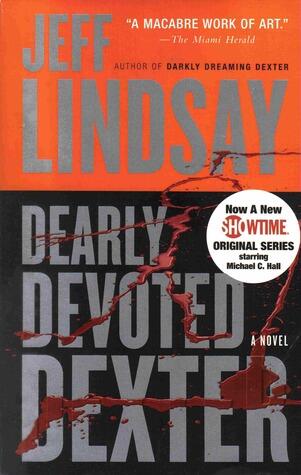
In this latest chapter of Dexter's journey, readers are drawn deeper into his world, where love and obsession intertwine with his twisted moral code. As he navigates his relationships, both personal and professional, secrets unravel and the lines between right and wrong blur further. Dexter's charm and wit create a compelling narrative that keeps readers on the edge of their seats, torn between rooting for him and recoiling from his gruesome methods.
As familiar faces return and new threats arise, Dexter must confront not only his past but also what it truly means to be devoted to someone. The interplay of psychology, suspense, and dark humor ensures that this installment is as exhilarating as it is thought-provoking. With every turn of the page, the reader is invited into a world where danger lurks around every corner, and loyalty is tested in the most unexpected ways.
Szczegóły książki
Recenzje
Zobacz wszystkie
🔸13.2% Still, it’s always nice to be around somebody who thinks I am wonderful. It confirms my low opinion of people.
🔸 23% REALLY tired of Dexter (& the author) thinking/saying Dex isn't human. Of course he is! And anything he does is human behavior. Just like everyone else, including serial killers worse than him.

The second novel in the series is just as enjoyable as the first even though its character development has been virtually reduced to a psychological study of Dexter alone. After familiarizing his readers with the environment and characters of Darkly Dreaming Dexter, Lindsay focuses in this volume on Dexter's psyche, on his drives, desires, and reasoning. In this manner, we move from the morally controversial question of having Dexter liquidate the wicked, and whether he has any right to do so at all, to the inner working of his mind and the true incentives behind his crimes. Dexter is obviously still targeting the lowest class of monsters, featuring this time a couple of pedophiles. In so doing, he is apparently acting as an avenger of the weak, but now we understand as well that his central motivation is the deviant desire for criminal violence. With such a revelation, Lindsay allows his readers ample space to get to know Dexter just a little better. In order to achieve this, the latter is given an even more playful and sarcastic tone, which allows a better understanding of the matters, and has the ability to penetrate his complex emotional cocoon (a thing, the existence of which, Dexter solemnly denies), as well as understand the nature of his fears, concerns, and the existential workings of his mind. Seen from this angle, I can't help but think of Dexter as a different version of Dr. Jekyll (Robert Stevenson's The Strange Case of Dr. Jekyll and Mr. Hyde); a version much more at ease with its own shadow. Both Jekyll and Dexter have a hidden part of themselves kept secret from the rest of the world. The only difference lies in the inner guilt tormenting Jekyll, and which is utterly absent in the case of Dexter. On the one hand this can be attributed to the latter's childhood trauma, which could have annihilated or at least buried such responses where they could not be reached easily. On the other hand, the difference between the two can be traced to the intolerance of Jekyll's community and the secretive life that was forced upon him, whereas Dexter had had an openminded foster father who not only accepted him for who he was, but also helped him reach social safety. The answer to such riddles remains of course inaccessible at this stage. Hopefully the rest of the novel in the series will help clarify it.