

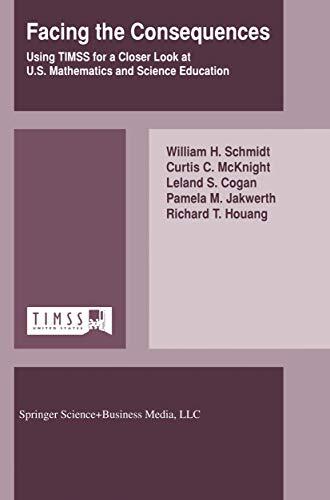
Opis
In this insightful exploration of U.S. mathematics and science education, the authors delve into the implications of the Trends in International Mathematics and Science Study (TIMSS). They analyze how American students measure up against their international peers, shedding light on the strengths and weaknesses of educational practices in the United States.
Through careful examination of data and educational frameworks, the authors argue for a reassessment of current teaching methodologies and curricula. They emphasize the need for systemic changes to improve student outcomes in these critical subjects, which have significant repercussions on the future workforce and global competitiveness.
The narrative challenges educators, policymakers, and stakeholders to confront the realities of the current educational landscape. By fostering a deeper understanding of the factors affecting student achievement, the work encourages a collective effort to enhance learning experiences and equip the next generation with essential skills in mathematics and science.
Through careful examination of data and educational frameworks, the authors argue for a reassessment of current teaching methodologies and curricula. They emphasize the need for systemic changes to improve student outcomes in these critical subjects, which have significant repercussions on the future workforce and global competitiveness.
The narrative challenges educators, policymakers, and stakeholders to confront the realities of the current educational landscape. By fostering a deeper understanding of the factors affecting student achievement, the work encourages a collective effort to enhance learning experiences and equip the next generation with essential skills in mathematics and science.
Szczegóły książki
Format
Miękka okładka
Strony
248 stron
Język
Angielski
Opublikowany
lut 28, 1999
Wydawca
Springer
Wydania
Wydania: 3
ISBN-10
0792355687
ISBN-13
9780792355687