

Opis
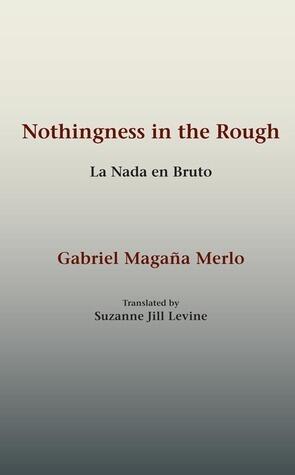
the first full-length book to be published in English by the great Mexican poet Gabriel Magaña Merlo, translated by the winner of the 2012 PEN Center USA Literary Award for Translation, Suzanne Jill Levine.
Here is what poet Frank Ducros, who has translated La Nada en Bruto into French, has to say about Gabriel Magaña Merlo:
Within the canon of forms we have inherited from antiquity, poetry has always been presented as either narrative (Homer), discourse (the philosophical poem) or sometimes, lyrical song (Alcman or Sappho). This continues to be the case in even the most modern avatar of tradition, that is, the novel, despite the sophistication of its most audacious authors (such as Proust, Joyce, Faulkner).
Only a few poets, following Mallarmé’s brilliant intuition that “poetry has completely changed its course after the great Homeric detour” which implied that narrative and discourse conceal rather than reveal the very essence of poetry, have ventured on a different path—upon which the word, necessarily embodied in language, cuts across that language limiting what it can say. It cannot be limited or reduced, furthermore, because it seeks by means of language itself the connections between the word, at its moment of birth, and the web of real things upon which it is called to reveal—not in the wake of things that have already appeared, but in their first, immediate and most secret possibilities of articulation.
Among those poets who have ventured on this path is Gabriel Magaña Merlo.
The result is a word that is not just bare or stripped down. Its rarity comes from its articulation by means of a syntax that is not and cannot be grammatical; the word precedes the very thing to which it is bound, and can only be a rhythm tracing a web of relations which would otherwise remain hidden, without the poem that produces the revelation.
In other words: none of the conventional forms suits the word. The difficulty implied in reading this poetry has nothing to do with an intended obscurity, but has everything to do with the need to let go of our age-old habits of reading.
Franc Ducros
Here is what poet Frank Ducros, who has translated La Nada en Bruto into French, has to say about Gabriel Magaña Merlo:
Within the canon of forms we have inherited from antiquity, poetry has always been presented as either narrative (Homer), discourse (the philosophical poem) or sometimes, lyrical song (Alcman or Sappho). This continues to be the case in even the most modern avatar of tradition, that is, the novel, despite the sophistication of its most audacious authors (such as Proust, Joyce, Faulkner).
Only a few poets, following Mallarmé’s brilliant intuition that “poetry has completely changed its course after the great Homeric detour” which implied that narrative and discourse conceal rather than reveal the very essence of poetry, have ventured on a different path—upon which the word, necessarily embodied in language, cuts across that language limiting what it can say. It cannot be limited or reduced, furthermore, because it seeks by means of language itself the connections between the word, at its moment of birth, and the web of real things upon which it is called to reveal—not in the wake of things that have already appeared, but in their first, immediate and most secret possibilities of articulation.
Among those poets who have ventured on this path is Gabriel Magaña Merlo.
The result is a word that is not just bare or stripped down. Its rarity comes from its articulation by means of a syntax that is not and cannot be grammatical; the word precedes the very thing to which it is bound, and can only be a rhythm tracing a web of relations which would otherwise remain hidden, without the poem that produces the revelation.
In other words: none of the conventional forms suits the word. The difficulty implied in reading this poetry has nothing to do with an intended obscurity, but has everything to do with the need to let go of our age-old habits of reading.
Franc Ducros
Szczegóły książki
Format
Miękka okładka
Strony
120 stron
Język
Angielski
Opublikowany
Nov 1, 2012
Wydawca
Diálogos
ISBN-10
1935084232
ISBN-13
9781935084235