

Opis
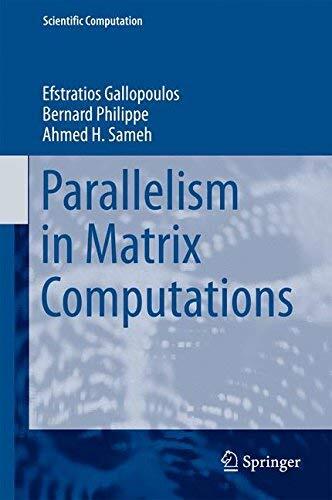
This work delves deep into the intricate world of matrix computations through the lens of parallelism, offering readers a comprehensive understanding of the techniques used to tackle large datasets efficiently. As advancements in technology continue to evolve, so too does the importance of optimizing computational methods, particularly in scientific applications where matrix operations are foundational.
The exploration of parallel algorithms showcases the potential for significantly speeding up complex calculations, making this book a vital resource for researchers and practitioners alike. With a focus on both theoretical underpinnings and practical implementations, it serves as a guide for those looking to enhance their computational skills and harness the power of parallel processing.
By underscoring the relevance of matrix computations in scientific computation, the text builds a strong case for continuous adaptation and learning in the field. Readers are invited to engage with the material, refining their understanding of parallelism and its application in real-world problems, ultimately advancing their own research and professional endeavors.
The exploration of parallel algorithms showcases the potential for significantly speeding up complex calculations, making this book a vital resource for researchers and practitioners alike. With a focus on both theoretical underpinnings and practical implementations, it serves as a guide for those looking to enhance their computational skills and harness the power of parallel processing.
By underscoring the relevance of matrix computations in scientific computation, the text builds a strong case for continuous adaptation and learning in the field. Readers are invited to engage with the material, refining their understanding of parallelism and its application in real-world problems, ultimately advancing their own research and professional endeavors.
Szczegóły książki
Format
Twarda okładka
Język
Angielski
Wydawca
Springer