

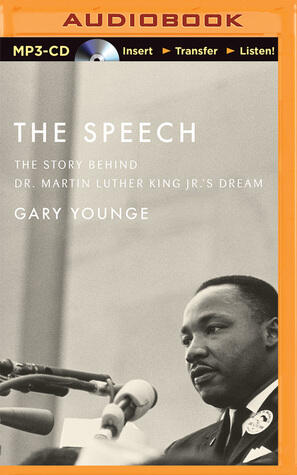
Opis
AudioFile Best Audiobooks—Biography and History, 2014
The night before the March on Washington in 1963, Martin Luther King, Jr. asked his aides for advice about the next day's speech. "Don't use the lines about 'I have a dream'," Wyatt Walker told him "It's trite, it's cliché. You've used it too many times already."
Martin Luther King, Jr. delivered at least 350 talks in 1963 alone. Countless speeches have been delivered on civil rights and, indeed, many others beside Martin Luther King's were delivered at the March on Washington. So what was it that made that particular speech historical? Why do we remember it? How do we remember it? And what about it have we chosen to forget?
Gary Younge examines what made the speech so timely...and so timeless. Few at that time could imagine the world he was evoking but to achieve its aims, all had to believe it was possible. Fifty years on it is clear that in eliminating segregation—not racism but formal, codified, explicit discrimination—the civil rights movement delivered the last significant moral victory in America for which there is still a consensus. The speech's appeal endures because it remains the most eloquent, poetic, unapologetic, and public articulation of that victory.
The night before the March on Washington in 1963, Martin Luther King, Jr. asked his aides for advice about the next day's speech. "Don't use the lines about 'I have a dream'," Wyatt Walker told him "It's trite, it's cliché. You've used it too many times already."
Martin Luther King, Jr. delivered at least 350 talks in 1963 alone. Countless speeches have been delivered on civil rights and, indeed, many others beside Martin Luther King's were delivered at the March on Washington. So what was it that made that particular speech historical? Why do we remember it? How do we remember it? And what about it have we chosen to forget?
Gary Younge examines what made the speech so timely...and so timeless. Few at that time could imagine the world he was evoking but to achieve its aims, all had to believe it was possible. Fifty years on it is clear that in eliminating segregation—not racism but formal, codified, explicit discrimination—the civil rights movement delivered the last significant moral victory in America for which there is still a consensus. The speech's appeal endures because it remains the most eloquent, poetic, unapologetic, and public articulation of that victory.
Szczegóły książki
Format
Audiobook
Język
Angielski
Opublikowany
Jan 27, 2015
Wydawca
Audible Studios on Brilliance Audio
ISBN-10
1501251422
ISBN-13
9781501251429