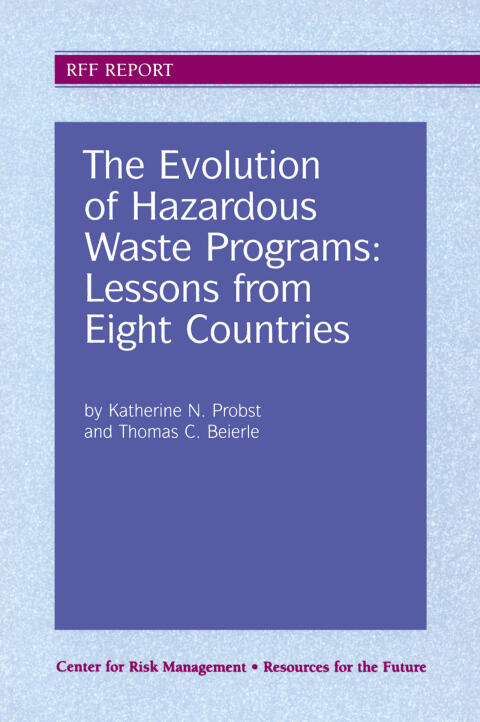
The Evolution of Hazardous Waste Programs
Brak ocen
Science & Technology
Health & Wellness
Format
Kindle
Strony
115
Język
Angielski
Opublikowany
Jan 1, 2014
Wydawca
Routledge
Wydanie
1
ISBN-10
1134271972
ISBN-13
9781134271979
Opis
This insightful work delves into the intricate evolution of hazardous waste management programs across various nations. It highlights how initial initiatives often stem from urgent environmental crises that prompt governments to take action. As awareness grows and regulatory frameworks are established, these programs undergo significant transformations to address emerging challenges and incorporate technological advancements.
The authors, Katherine N. Probst and Thomas C. Beierle, offer a thorough examination of the factors that influence the development and effectiveness of these programs. They explore key elements such as public policy, stakeholder engagement, and the role of scientific research in shaping effective waste management strategies. This comprehensive analysis provides readers with a deeper understanding of how governments adapt their approaches to hazardous waste in response to changing societal needs.
By analyzing different case studies, the book underscores the importance of collaboration between public sectors, private industries, and communities. It emphasizes that successful programs are not only reactive but also proactive, often focusing on prevention and sustainable practices that mitigate risk from the outset. Through its careful evaluation of both successes and setbacks, the text serves as a crucial resource for policymakers, environmental advocates, and scholars alike.
Ultimately, the narrative weaves together a story of trial, error, and progress, illuminating the ongoing journey towards improved environmental stewardship. The insights shared within the pages encourage a reflective consideration of past efforts while also inspiring future innovations in hazardous waste management practices worldwide.
The authors, Katherine N. Probst and Thomas C. Beierle, offer a thorough examination of the factors that influence the development and effectiveness of these programs. They explore key elements such as public policy, stakeholder engagement, and the role of scientific research in shaping effective waste management strategies. This comprehensive analysis provides readers with a deeper understanding of how governments adapt their approaches to hazardous waste in response to changing societal needs.
By analyzing different case studies, the book underscores the importance of collaboration between public sectors, private industries, and communities. It emphasizes that successful programs are not only reactive but also proactive, often focusing on prevention and sustainable practices that mitigate risk from the outset. Through its careful evaluation of both successes and setbacks, the text serves as a crucial resource for policymakers, environmental advocates, and scholars alike.
Ultimately, the narrative weaves together a story of trial, error, and progress, illuminating the ongoing journey towards improved environmental stewardship. The insights shared within the pages encourage a reflective consideration of past efforts while also inspiring future innovations in hazardous waste management practices worldwide.
Recenzje
Nie ma jeszcze recenzji
Bądź pierwszy, aby zrecenzować tę książkę i podziel się swoimi przemyśleniami
Dodaj pierwszą recenzjęDziennik czytania
Nie znaleziono dzienników czytania
Zacznij śledzić swój postęp w czytaniu, aby zobaczyć logi tutaj
Dodaj swój pierwszy dziennik czytaniaNotatki
Dziennik transakcji
Nie znaleziono dzienników transakcji
Zacznij śledzić swoje transakcje książkowe, aby zobaczyć logi tutaj
Dodaj swój pierwszy dziennik transakcji