

Descrição
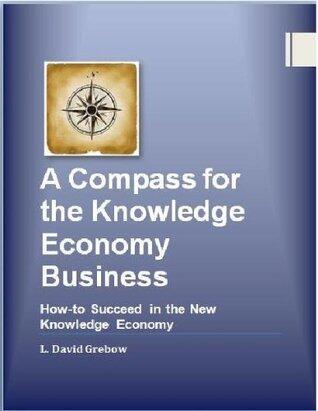
A Compass for the Knowledge Economy How-to Succeed in the New Knowledge Economy is a indispensable guide to help you understand where we have been and where we are going. It is a critical piece of the puzzle to show you how to become a winner in this new global hypercompetitive marketplace where anyone can start a successful business.
Written for businesspeople as well as entrepreneurs, the ebook provides a clear insight into the three most recent economic paradigms - Agriculture, Industrial and Knowledge - and why it is critical to understand the differences.
Knowing the basis for success in the previous two economic paradigms provides you with the vision of what you need to do to succeed in this new Knowledge Economy.
Here's are some
For starters, since it always helps to know where you are before you decide where you're going, this report clearly explains the three economic paradigms ... from the Agricultural to the Industrial to the Knowledge Economy.
Once you see where we've been, and understand that almost ALL the current business models, methods, theories and approaches were designed for the Agricultural and Industrial Economies, you will hopefully see why business models everywhere need to change, go digital and enter the Knowledge Economy.
Several years ago, I gave a presentation to the annual gathering of CIO's at Boeing in Southern California. As the top CIO was leading me into the conference room, she told me that the building itself has an interesting history.
Originally an orchard grove for oranges, the building was first used as a giant manufacturing facility to produce airplanes. When the demand for planes was reduced, the building was cut up into floors, offices and cubicles and people spent their workdays in front of computers producing, refining, defining, revising, discussing, and communicating ideas. Ideas for new planes. Ideas for improving production of planes. Ideas about related projects that had something to do with planes.
One piece of land, three economic paradigms.
The businesspeople and entrepreneurs of the previous two economic paradigms were very clear about what was happening and what they needed to do to be successful.
As this new Knowledge Economy emerged and took off, businesses that did not pay attention to the shift in the economic paradigm, and hung onto the past died. Some died quickly, others had a painfully slow death, and many just quietly disappeared from the business landscape.
The very definition of wealth changed according to each paradigm. It started with land, then moved to things and finally became ideas - knowledge and know-how. We moved from working with our backs to our hands and today to our minds.
It’s important to note that the English language has no word for what’s happening now in the Knowledge Economy being driven by Digital Technology. We have generic words for change and the word “evolution” when change moves slowly, and even “revolution” for change that moves quickly. But there is no word for how fast Digital Technology is moving and changing everything including the speed of change.
Digital technology is ubiquitous and someone is finding new and often disruptive ways to employ it, every second of every day, in every corporation, company, basement, garage, tin shack and mud hut all over the world. And it is suddenly adopted and adapted in hundreds of new ways and we cannot remember a time when we were not using it.
Running a business or thinking of starting one, you need a compass ...
Written for businesspeople as well as entrepreneurs, the ebook provides a clear insight into the three most recent economic paradigms - Agriculture, Industrial and Knowledge - and why it is critical to understand the differences.
Knowing the basis for success in the previous two economic paradigms provides you with the vision of what you need to do to succeed in this new Knowledge Economy.
Here's are some
For starters, since it always helps to know where you are before you decide where you're going, this report clearly explains the three economic paradigms ... from the Agricultural to the Industrial to the Knowledge Economy.
Once you see where we've been, and understand that almost ALL the current business models, methods, theories and approaches were designed for the Agricultural and Industrial Economies, you will hopefully see why business models everywhere need to change, go digital and enter the Knowledge Economy.
Several years ago, I gave a presentation to the annual gathering of CIO's at Boeing in Southern California. As the top CIO was leading me into the conference room, she told me that the building itself has an interesting history.
Originally an orchard grove for oranges, the building was first used as a giant manufacturing facility to produce airplanes. When the demand for planes was reduced, the building was cut up into floors, offices and cubicles and people spent their workdays in front of computers producing, refining, defining, revising, discussing, and communicating ideas. Ideas for new planes. Ideas for improving production of planes. Ideas about related projects that had something to do with planes.
One piece of land, three economic paradigms.
The businesspeople and entrepreneurs of the previous two economic paradigms were very clear about what was happening and what they needed to do to be successful.
As this new Knowledge Economy emerged and took off, businesses that did not pay attention to the shift in the economic paradigm, and hung onto the past died. Some died quickly, others had a painfully slow death, and many just quietly disappeared from the business landscape.
The very definition of wealth changed according to each paradigm. It started with land, then moved to things and finally became ideas - knowledge and know-how. We moved from working with our backs to our hands and today to our minds.
It’s important to note that the English language has no word for what’s happening now in the Knowledge Economy being driven by Digital Technology. We have generic words for change and the word “evolution” when change moves slowly, and even “revolution” for change that moves quickly. But there is no word for how fast Digital Technology is moving and changing everything including the speed of change.
Digital technology is ubiquitous and someone is finding new and often disruptive ways to employ it, every second of every day, in every corporation, company, basement, garage, tin shack and mud hut all over the world. And it is suddenly adopted and adapted in hundreds of new ways and we cannot remember a time when we were not using it.
Running a business or thinking of starting one, you need a compass ...
Detalhes do Livro
Formato
Kindle
Páginas
14 páginas
Idioma
Inglês
Editora
ePub Press