

Detalhes do Livro
Descrição
Gêneros
Avaliações
Ver Todos
omg that was a hard ride, i mean its too much, but god damn its beautiful

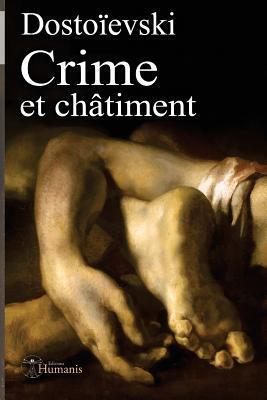
Although it is the most read among Dostoevsky's novels on account of its unique plot, thrilling mood, and detective-like style, Crime and Punishment is also one of the works that I can't write about lightly. Both my words and ideas get confused whenever I attempt an analysis of any depth of either plot or characters. Maybe, this is due to the paradoxicality introduced by the author when crafting the psyche of his focal character, the complexity of certain passages and conversations found in the text, or the absence of his own judgement and personal contribution in all that concerns psychology, philosophy, and view point. In regard to the latter part, I find Dostoevsky's employment of high brow conversations and intellectual debates between characters, representing opposing ideologies and systems of thought, very interesting because it places a shade or a thick veil between the reader and the author's personal views. The arguments advanced by Porfiry on the one hand, and Raskolnikov, on the other, in one of their multiple exchanges, is one good illustration of this technique. Nowhere in the plot does the one or the other display a weakness in his reasoning, a relenting, or even a subtle shakiness that might betray the author by hinting at a biased point of view. Thus, readers of all eras can only speculate about the matter with hardly anything substantial to back up their conclusions. The book remains a colossal achievement in the world of literature thanks to its richness and the complexity of the psychological and philosophical debates which set the machinery of the reader's mind in motion in connection with many a crucial question including the meaning of life, the meaningless of existence, morality, criminality, equality and self-worth. Raskolnikov's Napoleonic dreams and Nietzschean ideas, for instance, collapse when he realizes that the skeleton upon which he had erected his murder was neither strong nor sane enough to carry such a weighty burden. This might explain his odd abstention from spending the stolen money even under the greatest of financial strains. The core of his system of thought was then shaken, and under such circumstances, everything else became secondary and unimportant. Another point that is worthy of mention is the symbolic presence of certain mental parts and psychological components of Raskolnikov's within a number of other characters. Sonia, for instance, can be read as a personification of his ego in a Freudian reading of the plot, while Svidrigaïlov could be the id component. Sonia's influence is religious and directed towards Christian repentance. Svidrigaïlov, on the other hand, clearly represents a darker self, a personality driven by the gratification of desire. Moreover, the latter's death in the plot is perfectly tuned to Sonia's conquest of Raskolnikov by convincing him of the necessity of confession and repentance. His superego can be found in the middle ground he had established between these two alter egos. At the end, he had confessed his crime and assumed his punishment, but he never repented it in the sense desired and wished for by Sonia. These are pretty much my humble thoughts in regard to one of the Titans of Russian literature. This review can, by no means, be a detailed study of the literary interpretations of the work, and is therefore meant as nothing of the kind. I simply record in it the broad lines that are the fruits of a second reading of the book, and a hopeful design of analyzing it in details sometime in the future.

This was an exceptional book and I am at my second read. I loved EVERY second of it, especially Raskolnikov's mind and I found his theory to be very interesting even though not exactly..well... morally right.And to know I missed so much information and hints in the first read! His obvious self destruction, misanthropy, idealization and devaluation of his own existence and of other people, all amazed me. It was truly an emotional rollercoaster and definitely the best book I've read yet. Also his redemption arc is amazing and loved the progression of the relationship between him and Sonya even if, boy, it was hard at first...P.S. The fact that Dostoevsky's daughter who died at 3 months old was named Sonya is truly heartbreaking.