

Descrição
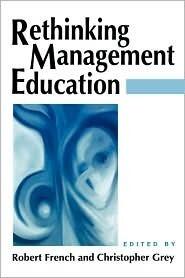
At a time of ever-increasing debate about orthodox approaches to management education, and their application in the post-industrial era, this innovative book brings together the work of authors actively engaged in developing new forms of education.
The introduction contrasts dominant utilitarian and functionalist conceptions of management education with various alternatives. It argues the need for a critical and pluralistic form of management education whereby participants are introduced to the full diversity of appropriate perspectives and debates. The remainder of the book echoes this commitment by exploring a range of approaches, including those based in psychoanalysis, critical theory and poststructuralism. Throughout the book, there is a focus is upon the implications of problematizing management knowledge so as to facilitate alternative and critical modalities of teaching and learning. In this context management is seen not simply as a bundle of skills and techniques but, rather, as a complex social, political and moral practice.
The introduction contrasts dominant utilitarian and functionalist conceptions of management education with various alternatives. It argues the need for a critical and pluralistic form of management education whereby participants are introduced to the full diversity of appropriate perspectives and debates. The remainder of the book echoes this commitment by exploring a range of approaches, including those based in psychoanalysis, critical theory and poststructuralism. Throughout the book, there is a focus is upon the implications of problematizing management knowledge so as to facilitate alternative and critical modalities of teaching and learning. In this context management is seen not simply as a bundle of skills and techniques but, rather, as a complex social, political and moral practice.
Detalhes do Livro
Formato
Capa dura
Páginas
224 páginas
Idioma
Inglês
Publicado
ago 30, 1996
Editora
SAGE Publishing
Edições
3 edições
ISBN-10
0803977824
ISBN-13
9780803977822