Описание
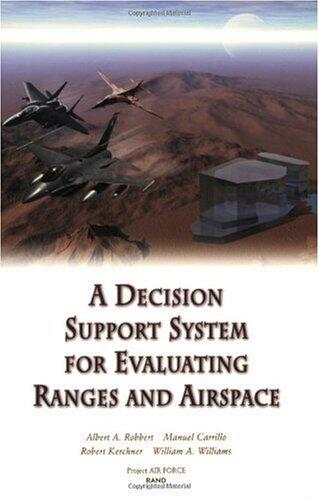
In a comprehensive exploration of training resources for the Air Force, this work delves into the complexities of evaluating ranges and airspace. The authors present a detailed analysis of how these national assets are essential for effective military training. By providing insights into the decision-making processes regarding the use and management of these resources, the narrative bridges the gap between theoretical concepts and practical applications.
Through a thoughtful examination of historical data and contemporary issues, the book emphasizes the importance of decision support systems in ensuring optimal utilization of airspace. It discusses various factors influencing airspace access and allocation, demonstrating how strategic evaluations can lead to improved training outcomes. The interplay between operational needs and resource management is carefully considered, allowing readers to grasp the critical challenges faced by military planners.
This exploration reveals a commitment to enhancing training effectiveness within the Air Force. By focusing on data-driven methodologies, the authors advocate for a systematic approach in addressing the multifaceted needs of military training scenarios. Their insights pave the way for future discussions on how to optimize national resources for airpower readiness.
Overall, this work serves as an invaluable resource for military professionals, policy makers, and academics interested in the integration of decision support systems within the realm of Air Force training. It encourages ongoing dialogue about the evolving demands placed on military infrastructure while highlighting the critical role that informed decision-making plays in national defense.
Through a thoughtful examination of historical data and contemporary issues, the book emphasizes the importance of decision support systems in ensuring optimal utilization of airspace. It discusses various factors influencing airspace access and allocation, demonstrating how strategic evaluations can lead to improved training outcomes. The interplay between operational needs and resource management is carefully considered, allowing readers to grasp the critical challenges faced by military planners.
This exploration reveals a commitment to enhancing training effectiveness within the Air Force. By focusing on data-driven methodologies, the authors advocate for a systematic approach in addressing the multifaceted needs of military training scenarios. Their insights pave the way for future discussions on how to optimize national resources for airpower readiness.
Overall, this work serves as an invaluable resource for military professionals, policy makers, and academics interested in the integration of decision support systems within the realm of Air Force training. It encourages ongoing dialogue about the evolving demands placed on military infrastructure while highlighting the critical role that informed decision-making plays in national defense.
Детали книги
Формат
Мягкая обложка
Страницы
77 страниц
Язык
Английский
Опубликовано
May 23, 2001
Издатель
RAND Corporation
Издания
Изданий: 2
ISBN-10
0833029355
ISBN-13
9780833029355