

Описание
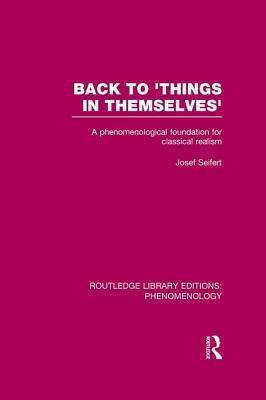
In an enlightening dialogue with Descartes, Kant, Husserl and Gadamer, Professor Seifert argues that the original inspiration of phenomenology was nothing other than the primordial insight of philosophy itself, the foundation of philosophia perennis. His radical rethinking of the phenomenological method results in a universal, objectivist philosophy in direct continuity with Plato, Aristotle and Augustine.
In order to validate the classical claim to know autonomous being, the author defends Husserl's methodological principle "Back to things themselves" from empiricist and idealist critics, including the later Husserl, and replies to the arguments of Kant which attempt to discredit the knowability of things in themselves.
Originally published in 1982, this book culminates in a phenomenological and critical unfolding of the Augustinian cogito, as giving access to immutable truth about necessary essences and the real existence of personal being.
Детали книги
Формат
Kindle
Страницы
384 страниц
Язык
Английский
Опубликовано
окт 8, 2013
Издатель
Routledge
Издания
Изданий: 3
ISBN-10
1134479522
ISBN-13
9781134479528