Детали книги
Описание
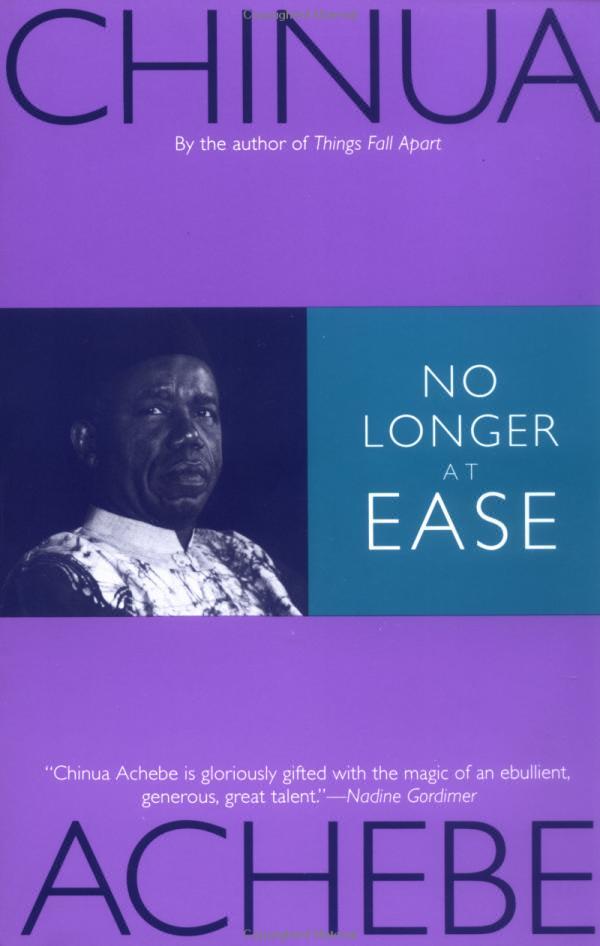
Faced with the reality of conflicting cultural influences and the weight of tradition, Obi grapples with decisions that see him caught between two worlds. His struggle reflects the broader turmoil within Nigeria as it transitions from colonial rule to independence, embodying the challenges of modernity and the preservation of heritage.
As Obi attempts to balance his Western education with the expectations of his Igbo community, he faces moral dilemmas that test his character and beliefs. His journey illuminates the cultural dissonance and the personal sacrifices endured in the pursuit of progress and identity.
Through rich character development and thought-provoking themes, the narrative reveals the intrinsically human experience of longing, belonging, and the quest for self in a rapidly changing world. The story captures the essence of a young man's aspirations thwarted by the realities of a society in flux, evoking empathy and reflection.
Жанры
Обзоры
Посмотреть все
In this last book of the African trilogy, Achebe takes us back to a period closer to that of Things Fall Apart and the beginning of British colonization in Nigeria. Thus, the Igbo culture and the Igbo traditions are vividly present in the novel, and allowed a minute and detailed description of customs, daily lives, and beliefs in a manner that reflects Achebe's desire not only to acquit the African individual from the prejudice that stuck to him in Western perception, but also to reach the African readers and raise their awareness in regard to the beauty and value of their original culture.The main conflict in the book is rather political than religious although religion and the clash between Christian and Igbo faiths are still present, and even rise to prominence in some parts of the narrative. The focus is, therefore, on the concept of power which was largely withheld by the British colonizers, and passed in some degrees to the Christianized Nigerians who adopted the new religion, the new language, and the Western life style.In spite of that, however, the native villages are not portrayed as a rural Eden violated by an evil colonizer. Achebe takes a realistic approach in his narrative prompting his readers to grasp the importance of tolerance by making of the Westerners the ironical peace makers between the different clans on two distinct occasions. This emphasis on the importance of tolerance is strengthened with the help of Ezeulu, the chief priest of Ulu. The latter is portrayed as a strong man who lacks wisdom. His judgement is clouded by egotism and vanity, and by the end of the novel he even drags his people to the brink of destruction on account of pride and self-importance. Ezeulu's lack of tolerance is what brings ruin to his beloved creed, for in refusing to compromise between his vanity and his people's needs he had pushed them to embrace the protection of the Christian God if not out of conviction, then out of necessity.
Things had fallen apart in Nigeria, and now the natives are no longer at ease. In this second novel of the African tribology, Achebe dwells on the aftermath of colonization, of adopting a new religion, and of marginalizing a great culture. The Nigerian population of the mid 1950s was torn apart between new ideals and past ideas. Although Christianity had taken over the heathenish faiths, some undying ideas from the latter creeds remained behind to govern the judgement of "civilized" Christians. Obi's marriage with Clara was, for instance, opposed with vehemence by his family and people on account of her belonging to Osu origins in spite of Christianity's abolition of such notions. Obi's training in England had also given him a different image of his own country. Throughout the novel, there is an apparent clash between the Nigeria in Obi's mind and the real country as it truly was. This chasm was dug by means of the Western ideals which had given Obi a set of expectations in regard to his home country; expectations that were unrealizable. The cultural change which had altered the old Nigeria was neither deep nor strong enough to penetrate its original structure. The change was accordingly shallow; people liked to dress, dance, and eat in a certain Western manner, but their thoughts were by no means entirely Western. There was corruption and prejudice in the country, there was a particular amount of racism among the European citizens, and overall the atmosphere was confusing and contradictory; hence, the title "No Longer at Ease". Okonkwo had fallen victim to the center which held no more in his tribal life. His grand-son Obi had fallen victim to the confusion which ensued afterwards. The Old Umofian's ideals and guidelines were gone for a couple of generations when the latter had to battle against his past and against his present. On the one hand, he had to face the absurd traditions of a heathenish past. On the other, he had to struggle with a Western system that gave his past this sense of absurdity, and which overwhelmed him all the same with notions and requirements he was by no means prepared to meet. In spite of his Western training, we see Obi at a loss with his electricity and car bills, and with his incomprehensible taxes and overwhelming expenditures which shows how the young man was neither in tune with his Nigerian origins nor with the Western world.