

Описание
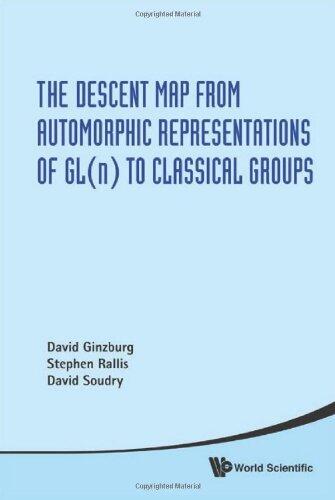
In this compelling exploration, a new landmark is established in the field of automorphic forms and their connections to classical groups. The author delves into the intricate landscape of automorphic representations of GL(n), shedding light on the fundamental principles that underpin this profound mathematical framework. With a clear emphasis on the process of descent, the book intricately weaves together theoretical concepts and practical applications, making it accessible to a broad audience.
Through careful analysis, the author presents an explicit inverse map that links automorphic representations to classical groups, offering fresh insights that enrich the understanding of both areas. This approach not only highlights the interplay between these diverse mathematical structures but also opens avenues for future research, inviting scholars and enthusiasts to further investigate the implications of automorphic descent in various contexts.
Rich in detail yet approachable, the book serves as a valuable resource for mathematicians seeking to deepen their comprehension of automorphic forms and their significance in number theory and beyond. Its structured approach, combined with a wealth of examples, fosters a deeper appreciation of the subject matter, making it an essential addition to the library of any serious student or researcher in the field.
Through careful analysis, the author presents an explicit inverse map that links automorphic representations to classical groups, offering fresh insights that enrich the understanding of both areas. This approach not only highlights the interplay between these diverse mathematical structures but also opens avenues for future research, inviting scholars and enthusiasts to further investigate the implications of automorphic descent in various contexts.
Rich in detail yet approachable, the book serves as a valuable resource for mathematicians seeking to deepen their comprehension of automorphic forms and their significance in number theory and beyond. Its structured approach, combined with a wealth of examples, fosters a deeper appreciation of the subject matter, making it an essential addition to the library of any serious student or researcher in the field.
Детали книги
Формат
Твердый переплет
Язык
Английский
Опубликовано
Jan 1, 1787
Издатель
World Scientific Publishing Company