

Beskrivning
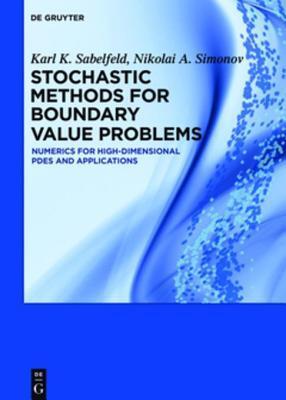
This monograph explores innovative stochastic algorithms derived from random walk principles, specifically designed for addressing high-dimensional boundary value problems. The author deftly presents the complexities inherent to partial differential equations, emphasizing the challenges posed by their intricate boundaries.
Karl K. Sabelfeld’s work delves into various numerical techniques that leverage randomness to enhance computational efficiency, making significant strides in the realm of numerical analysis. The methodology discussed offers a fresh perspective on traditional approaches, demonstrating how randomness can be harnessed to tackle problems that are otherwise intractable through deterministic means.
Through detailed explanations and practical applications, the author illuminates the potential of stochastic methods in real-world scenarios, bridging the gap between theory and practice. Readers are invited to engage with the materials in a way that fosters both understanding and application, ultimately contributing to advancements in the field.
Karl K. Sabelfeld’s work delves into various numerical techniques that leverage randomness to enhance computational efficiency, making significant strides in the realm of numerical analysis. The methodology discussed offers a fresh perspective on traditional approaches, demonstrating how randomness can be harnessed to tackle problems that are otherwise intractable through deterministic means.
Through detailed explanations and practical applications, the author illuminates the potential of stochastic methods in real-world scenarios, bridging the gap between theory and practice. Readers are invited to engage with the materials in a way that fosters both understanding and application, ultimately contributing to advancements in the field.
Bokdetaljer
Format
e-bok
Sidor
216 sidor
Språk
Engelska
Publicerad
okt 15, 2016
Förlag
de Gruyter
Upplagor
3 utgåvor
ISBN-10
3110479451
ISBN-13
9783110479454