

Bokdetaljer
Format
Inbunden
Språk
Engelska
Publicerad
Jan 1, 1978
Förlag
The Johns Hopkins University Press
ISBN-10
0801820405
ISBN-13
9780801820403
Beskrivning
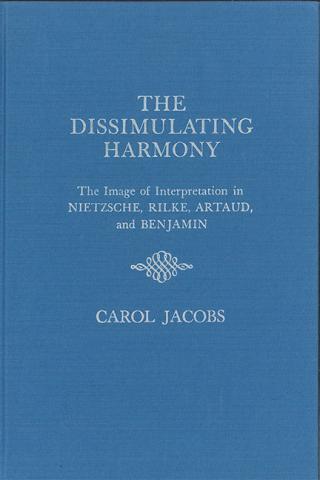
In her insightful exploration, Carol Jacobs delves into the intricate relationship between interpretation and artistic expression as seen through the works of Nietzsche, Rilke, Artaud, and Benjamin. By examining Nietzsche's notebooks and The Birth of Tragedy, she reveals the philosopher's complex views on art and existence, emphasizing the dissonance that often accompanies the pursuit of meaning.
Jacobs continues her analysis with Rilke's Tenth Duino Elegy, where she highlights the poet's meditative reflections on life, mortality, and the role of the artist in reconciling the environmental chaos of existence. She captures the essence of Rilke's existential exploration and his revolutionary approach to language, drawing parallels between his thoughts and those of other influential thinkers.
Through a rigorous and dynamic examination, Jacobs painstakingly uncovers the layers of thought that bind these diverse figures together. Their collective endeavors reveal a profound engagement with the act of interpretation in a world fraught with uncertainty, ultimately suggesting a harmony that arises amidst dissimulation.
Jacobs continues her analysis with Rilke's Tenth Duino Elegy, where she highlights the poet's meditative reflections on life, mortality, and the role of the artist in reconciling the environmental chaos of existence. She captures the essence of Rilke's existential exploration and his revolutionary approach to language, drawing parallels between his thoughts and those of other influential thinkers.
Through a rigorous and dynamic examination, Jacobs painstakingly uncovers the layers of thought that bind these diverse figures together. Their collective endeavors reveal a profound engagement with the act of interpretation in a world fraught with uncertainty, ultimately suggesting a harmony that arises amidst dissimulation.