

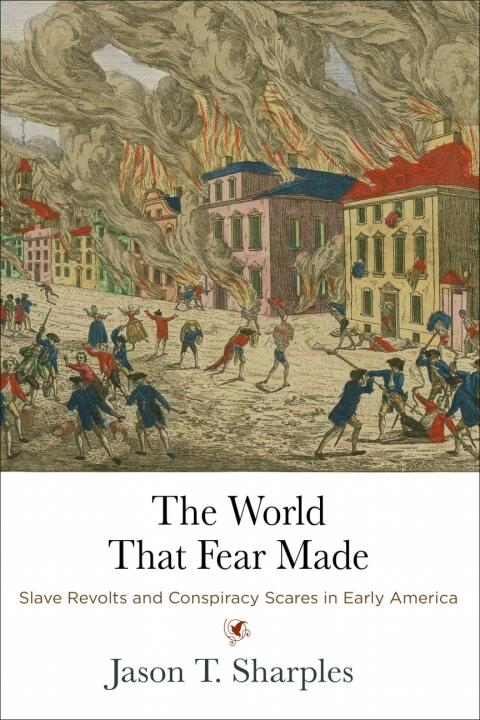
The World That Fear Made: Slave Revolts and Conspiracy Scares in Early America
av
Jason T. Sharples
Inga betyg ännu
History
Horror
Format
Kindle
Sidor
331
Språk
Engelska
Publicerad
Jan 1, 2020
Förlag
University of Pennsylvania Press
Utgåva
1
ISBN-10
0812297105
ISBN-13
9780812297102
Beskrivning
A thought-provoking history of slaveholders' fear of the people they enslaved and its consequencesFrom the Stono Rebellion in 1739 to the Haitian Revolution of 1791 to Nat Turner's Rebellion in 1831, slave insurrections have been understood as emblematic rejections of enslavement, the most powerful and, perhaps, the only way for slaves to successfully challenge the brutal system they endured. In The World That Fear Made, Jason T. Sharples orients the mirror to those in power who were preoccupied with their exposure to insurrection. Because enslavers in British North America and the Caribbean methodically terrorized slaves and anticipated just vengeance, colonial officials consolidated their regime around the dread of rebellion. As Sharples shows through a comprehensive data set, colonial officials launched investigations into dubious rumors of planned revolts twice as often as actual slave uprisings occurred. In most of these cases, magistrates believed they had discovered plans for insurrection, coordinated by a network of enslaved men, just in time to avert the uprising. Their crackdowns, known as conspiracy scares, could last for weeks and involve hundreds of suspects. They sometimes brought the execution or banishment of dozens of slaves at a time, and loss and heartbreak many times over.Mining archival records, Sharples shows how colonists from New York to Barbados tortured slaves to solicit confessions of baroque plots that were strikingly consistent across places and periods. Informants claimed that conspirators took direction from foreign agents; timed alleged rebellions for a holiday such as Easter; planned to set fires that would make it easier to ambush white people in the confusion; and coordinated the uprising with European or Native American invasion forces. Yet, as Sharples demonstrates, these scripted accounts rarely resembled what enslaved rebels actually did when they took up arms. Ultimately, he argues, conspiracy scares locked colonists and slaves into a cycle of terror that bound American society together through shared racial fear.
Recensioner
Inga recensioner ännu
Bli den första att recensera denna bok och dela dina tankar
Lägg till första recensionenLäsdagbok
Inga läsloggar hittades
Börja spåra dina läsframsteg för att se loggar här
Lägg till din första läsloggAnteckningar
Inga anteckningar hittades
Börja skriva anteckningar för att se dem här
Lägg till din första anteckningTransaktionslogg
Inga transaktionsloggar hittades
Börja spåra dina boktransaktioner för att se loggar här
Lägg till din första transaktionslogg