

书籍详情
描述
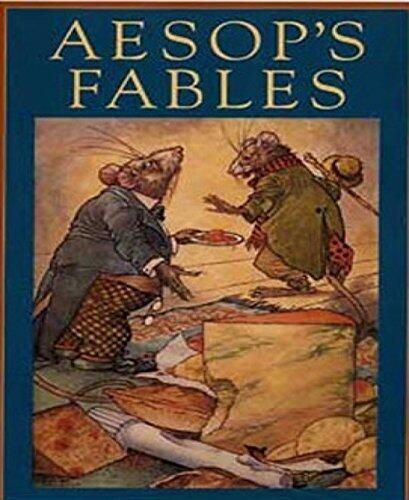
In Classical times there were various theorists who tried to differentiate these fables from other kinds of narration. They had to be short and unaffected; in addition, they are fictitious, useful to life and true to nature. In them could be found talking animals and plants, although humans interacting only with humans figure in a few. Typically they might begin with a contextual introduction, followed by the story, often with the moral underlined at the end. Setting the context was often necessary as a guide to the story's interpretation, as in the case of the political meaning of The Frogs Who Desired a King and The Frogs and the Sun.
Sometimes the titles given later to the fables have become proverbial, as in the case of 'killing the Goose that Laid the Golden Eggs or the Town Mouse and the Country Mouse. In fact some fables, such as The Young Man and the Swallow, appear to have been invented as illustrations of already existing proverbs. One theorist, indeed, went so far as to define fables as extended proverbs. In this they have an aetiological function, the explaining of origins such as, in another context, why the ant is a mean, thieving creature. Other fables, also verging on this function, are outright jokes, as in the case of The Old Woman and the Doctor, aimed at greedy practitioners of medicine.
类型
评论
查看全部

I first read this when i was 6.it was my first book that wasn't exactly a childreans book.having read it numerous amount of times since then. i have found that each time i read the stories, i have interpreted the stories differently each time.Take the tortise and the hare for example (the most famous of aesops fables).age 6 - Poor fluffy rabbit lost :o( i'm glad the tortise won.age 12 - why does everyone pick on the poor tortise? big bully for the hare.age 20 - ah Slow and steady wins the race... lol good one aesop. age 30- slow and staeady wins the race.... i may be slow but at least i'm doing the job right. nothing like rushing ahead and not doing the job properlyyou know i think the stories true meaning may have finally sunk in. i'm not sure if that is jus me being slow. or how i have perceived the stories as i've grown older.