

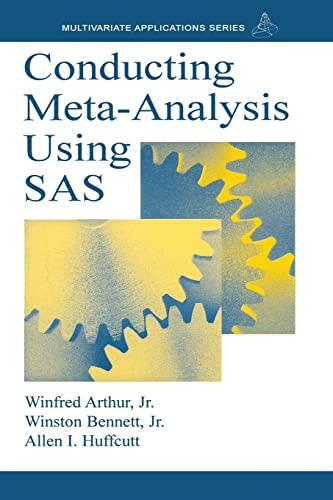
Conducting Meta-Analysis Using SAS
还没有评分
Health & Wellness
Psychology
格式
平装书
页数
202
语言
英语
已发布
Jun 1, 2001
出版商
Psychology Press
版本
1
ISBN-10
0805838090
ISBN-13
9780805838091
描述
"Conducting Meta-Analysis Using SAS" offers a comprehensive exploration of the meta-analysis process, particularly for researchers and statisticians eager to understand its applications within SAS software. The authors delve into the intricacies of meta-analysis, clarifying its significance in synthesizing research findings across multiple studies. This book serves as an essential resource for those looking to navigate the complexities of combining data and drawing meaningful conclusions from diverse sources.
The authors, distinguished experts in their fields, guide readers through the essential statistical methodologies that underpin meta-analysis. They provide clear explanations of various techniques, ensuring that even those with a basic understanding of statistics can follow along. The practical focus on SAS makes it especially valuable for practitioners who want to implement these methods in real-world research situations.
In addition to outlining theoretical frameworks, the book emphasizes practical applications, offering step-by-step instructions and illustrative examples. Readers are equipped with the tools they need to execute effective meta-analyses in their own work, enhancing the reliability and validity of their research results.
Aimed at researchers across disciplines, this text is not only educational but also a vital companion for anyone dedicated to advancing knowledge through rigorous statistical practices. It encourages a deeper understanding of how to critically evaluate and integrate evidence from varied studies, promoting a more thorough examination of the existing literature.
The authors, distinguished experts in their fields, guide readers through the essential statistical methodologies that underpin meta-analysis. They provide clear explanations of various techniques, ensuring that even those with a basic understanding of statistics can follow along. The practical focus on SAS makes it especially valuable for practitioners who want to implement these methods in real-world research situations.
In addition to outlining theoretical frameworks, the book emphasizes practical applications, offering step-by-step instructions and illustrative examples. Readers are equipped with the tools they need to execute effective meta-analyses in their own work, enhancing the reliability and validity of their research results.
Aimed at researchers across disciplines, this text is not only educational but also a vital companion for anyone dedicated to advancing knowledge through rigorous statistical practices. It encourages a deeper understanding of how to critically evaluate and integrate evidence from varied studies, promoting a more thorough examination of the existing literature.